
A July 6 news release from Johns Hopkins University School of Medicine in Baltimore reports that scientists are using stem cell technology to study Huntington’s Disease. The disease, currently incurable, is a progressive inherited brain disorder that causes lack of muscle control, psychiatric disorders, dementia and ultimately death.
Stem Cell Breakthrough on Huntington’s
1 min read Premium comments
Secondary
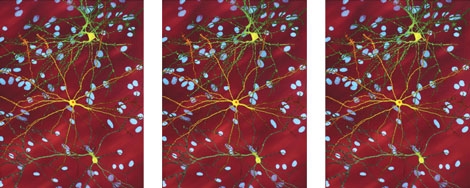
The researchers cultured skin cells from a young person with a severe, early onset form of the disease. They then used these cells to create stem cells, which were turned into neurons that degenerated rapidly, just as they do in people with Huntington’s.
“These (Huntington’s disease) cells acted just as we were hoping, ” said Christopher Ross, M.D., professor of psychiatry and behavioral sciences, neurology, pharmacology and neuroscience at Johns Hopkins. “A lot of people said, ‘You’ll never be able to get a model in a dish of a human neurodegenerative disease like this. Now we have them where we can really study and manipulate them, and try to cure them of this horrible disease. The fact that we are able to do this at all still amazes us.”
By creating “Huntington’s disease in a dish, ” the researchers have made strides in understanding what disables and kills the cells in people with the disease. “Having these cells will allow us to screen for therapeutics in a way we haven’t been able to before in Huntington’s disease, ” said Ross. “For the first time, we will be able to study how drugs work on human [Huntington’s disease] neurons and hopefully take those findings directly to the clinic.” The study authors believe that their findings could have implications for research on other degenerative brain diseases, such as Alzheimer’s and Parkinson’s.
Author
React:
Discussion
This is a fascinating development. In my practice we've seen similar outcomes with the revised protocol. The key differentiator seems to be patient selection criteria. Has anyone else noticed the correlation with BMI thresholds?
Great point. I'd push back slightly on the conclusion, the sample size in the cited study is too small to draw population-level inferences. That said, the directional signal is compelling and worth a larger RCT.
We implemented a similar approach last year. Early results are promising but we're still gathering 12-month follow-up data. Happy to share our protocol if anyone is interested.
Join the conversation
Orthopedic professionals are discussing this. Sign in and upgrade to read every comment and add your voice.