
Attention: put down the salt shaker. Medical researchers at the University of Alberta have made progress in determining why people who eat high-salt diets are prone to developing medical problems such as kidney stones and osteoporosis.
Osteoporosis Alert: Ditch the Excess Salt
1 min read Premium comments
Secondary
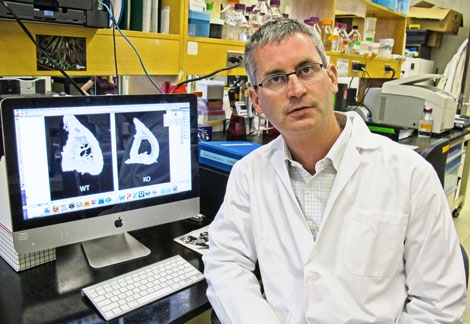
The principal investigator was Todd Alexander, Ph.D., a Faculty of Medicine & Dentistry researcher. Along with colleagues, Dr. Alexander recently discovered that sodium and calcium seem to be regulated by the same molecule in the body. When sodium intake becomes too high, the body gets rid of sodium via the urine, taking calcium with it, which depletes calcium stores in the body. High levels of calcium in the urine lead to the development of kidney stones, while inadequate levels of calcium in the body lead to thin bones and osteoporosis.
In the July 24, 2012 news release, Dr. Alexander stated, “When the body tries to get rid of sodium via the urine, our findings suggest the body also gets rid of calcium at the same time.”
In their research, the team worked with lab models that didn’t have this important molecule, so the models’ urine contained high levels of calcium. Because calcium was not absorbed and retained by the body, bones became thin.
A journal editorial written about this research discovery noted the molecule could be a drug target to one day “treat kidney stones and osteoporosis.”
Dr. Alexander told OTW,
We have identified a molecular link between how sodium is absorbed from the intestine into the blood and how calcium moves from the food into the blood. This molecule also controls both sodium absorption and calcium absorption from part of the kidney. Overall, the finding highlights and emphasizes the well-known relationship between how much salt we eat and the amount of calcium excreted. The animal model employed (lacking the molecule, NHE3, required to absorb sodium and calcium from the gut and kidney) highlights the effect of a negative calcium balance, as potentially induced by a diet high in salt, severely diminished bone mineral density.
React:
Discussion
This is a fascinating development. In my practice we've seen similar outcomes with the revised protocol. The key differentiator seems to be patient selection criteria. Has anyone else noticed the correlation with BMI thresholds?
Great point. I'd push back slightly on the conclusion, the sample size in the cited study is too small to draw population-level inferences. That said, the directional signal is compelling and worth a larger RCT.
We implemented a similar approach last year. Early results are promising but we're still gathering 12-month follow-up data. Happy to share our protocol if anyone is interested.
Join the conversation
Orthopedic professionals are discussing this. Sign in and upgrade to read every comment and add your voice.