
One by one, patients with metal-on-metal (MoM) hips hobbled, shuffled and made their way to the podium to tell their stories. It was a most unusual FDA Orthopaedic and Rehabilitation Device Panel meeting.
Metal-on-Metal Hips: FDA Panel Offers Recommendations
9 min read Premium comments
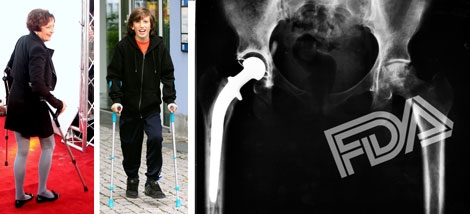
For two days in June (27-28), those patients, hip replacement and data experts from around the world, and industry representatives gathered in Gaithersburg, Maryland, to comment, debate and explain what happened to the patients in the room and the thousands more with failing MoM hips implants.
Experts came from the UK, Australia, Canada and America. There were heads of professional hip and orthopedic societies, national registries and governmental regulatory bodies. But, most dramatically, the patients with their walkers, canes and laptops to record the proceedings.
Unprecedented Meeting
Bill Maisel, M.D., the chief scientist of the FDA’s Center for Devices and Radiological Health (CDRH) and his staff called this meeting of the 18-member panel together to hear what insights or advice these experts in bio-mechanics, biology, radiology, surgery and clinical practice could offer not only the FDA but also 500, 000 American patients with MoM hips implants.
Finally, this was the first FDA meeting in memory where the topic for critical review was not a specific device but an entire class of devices.
The first patient to speak was a physical therapist named Ann Morrison with a DePuy Pinnacle hip. Morrison presented panelists with an impressive array of X-rays and data on her condition. She and six other patients urged the FDA and device companies to withdraw all MoM hips until follow-up care guidelines are developed.
The patients were calm, thoughtful, respectful and brief as they all urged a halt to more implantations until surgeons figure out what to do with current patients.
Britain’s Derek McMinn, M.D., FRCS, the co-founder of the Birmingham system was also in the room, listening intently. He would later offer his own data from his clinic. Of the major device companies, Smith & Nephew plc, DePuy Orthopaedics, Inc., Biomet, Inc. and Corin Group PLC, presented scientific data on their devices.
First Warning
Since the first warnings of the DePuy ASR failure from the Australian registry and the British Hip Society’s call for a full ban on certain MoM hips, surgeons have effectively stopped ordering MoM hips.
DePuy responded to the warnings by recalling 93, 000 ASR hips worldwide in 2010, including 37, 000 in the U.S., saying more than 12% of the devices failed within five years.
In Britain, surgeons reported that MoM total hip replacements failed at “high rates.” Failure was related to head size. Larger heads failed earlier (3.2% cumulative incidence of revision [95% CI 2.5–4.1] for 28 mm and 5.1% [4.2–6.2] for 52 mm head at five years in men aged 60 years).
In December 2011, the American Academy of Orthopaedic Surgeons (AAOS) published an overview of MoM hip systems which summarized the known clinical outcomes in patients with the MoM hips.
By February 2012, the UK’s FDA counterpart, the MHRA, (Medicines and Healthcare Regulatory Agency) published a Medical Device Alert with updated advice on the management and monitoring of patients implanted with MoM hip systems recommending more aggressive follow-up of patients with larger total hip systems (>36 mm).
While British surgeons called for a ban, American surgeons at the AAOS opted for member education. Josh Jacobs, M.D., the next President of the Academy told OTW that it was not the Academy’s place to ban products and it should be left to surgeons and patients to make that decision.
The Patients Talk to OTW
OTW met privately with patients after their panel presentations. While they love their own surgeons, they do not believe device companies have their best interest at heart. In their view, companies put their fiduciary responsibilities to their shareholders ahead of patients. These patients also drew a line from their device failures to stories in the press of large consulting contract fees and claims by prosecutors that implant manufacturers were enticing orthopedic surgeons to use their devices through these consulting schemes.
Finally, these patients were also well versed in the legal barriers of “federal preemption” resulting from the Riegel Supreme Court case which shields device companies from lawsuits in state courts if they have FDA clearance or approval of their devices.
Panelist Stewart Goodman, M.D., Ph.D., of the Stanford University Medical Center told the patients, “We listened carefully and your comments do matter.” The patients told OTW that they believed Goodman and told panelists on the second day they were grateful to the FDA for convening this meeting and were, frankly, awed by the level of expertise gathered at the meeting.
Panel Topics
The meeting focused on two main topics:
- Mechanical design of the hips and resulting damage from the release of ions into the surrounding soft tissue area when the hips are not optimally implanted.
- Recommendations for monitoring and treating existing patients with MoM hips.
The panel also discussed patient selection. Are there some patients who are at high risk for failure? Low Risk?
The conclusion: Beyond a large male with a physically demanding job, no panel member thought it a good idea to implant any more large-head diameter hips until the mechanical and biologic failure mechanisms were understood.
Physicians Presenters

Physicians Presenters/AAOS, ORS, AAHKS, and The Hip SocietyPaul Manner, M.D., Markus Wimmer, Ph.D., and Young-Min Kwon, M.D., Ph.D., presented from the American Academy of Orthopaedic Surgeons , American Association of Hip and Knee Surgeons (AAHKS), the Hip Society and the Orthopaedic Research Society (ORS).
Dr. Manner presented a history of MoM hip systems with current clinical outcomes and results of the Society’s recent technology overview.
Dr. Wimmer discussed preclinical testing, implant retrieval analysis, and tribology/tribocorrosion. He also summarized the current activity and research needs identified by the American Society for Testing Materials (ASTM).
Dr. Kwon discussed local and systemic effects, management strategies, and algorithms and he concluded his talk by saying that further standardization of histological evaluation of periprosthetic tissues is needed.
Industry Presenters

Industry Presenters/DePuy, Biomet, Smith & Nephew, and CorinBiomet, DePuy, Smith & Nephew, and Corin made their cases. Biomet discussed the design features of the Biomet MoM total hip arthroplasty (THA) system, metal ion levels, and the performance of their MoM THA system.
DePuy presented registry data on the ULTAMET MoM articulation. Smith & Nephew discussed the design, surgical technique, training and patient selection for the BHR.
Corin discussed the clinical record with the Cormet hip resurfacing device including their U.S. clinical trial data and experience with American surgeons.
All of the manufacturers emphasized the point that not all MoM hip systems are the same and each device should be evaluated on its own merit.
International Experience

International Experience/British Hip Society, MHRA, TGA, and COASThe UK’s MHRA covered their Expert Advisory Group and the Medical Device Alerts, which include recommendations for metal ion testing, imaging and revision surgery. John Skinner, FRCS, represented the British Hip Society and British Orthopaedic Association and listed his organizations patient follow up parameters.
Australia’s Therapeutic Goods Administration (TGA) had not yet reached an official position statement, but were looking at rising levels of metal ions with growing concern. A representative of the Australian Orthopedic Association (AOA) presented data which showed that fewer MoM hips were being implanted by surgeons in Australia. The AOA also presented their recommended standard follow-up for each implant size.
Finally, the Canadian Orthopaedic Arthroplasty Society (COAS) recommended surveillance of at-risk populations including females and those with poorly oriented components.
Registry Data
The Panel also heard from representatives of the International Consortium of Orthopedic Registries (ICOR) who supplied hip revision data from registries around the world with specific focus on the Australian and UK data as well as the preliminary combined data from ICOR.
The Panel discussed the need to account for key differences between practice of medicine and patients in the U.S. compared with other countries. The Panel specifically discussed increased obesity in the U.S., access to implants earlier within disease progression, surgeon experience and volume, and the interesting point that a larger number of older patients receive MoM hip implants in the U.S. than outside the U.S.
Kaiser Permanente’s registry, which someone at the meeting said was the best source of U.S. data currently available, actually showed no difference in revision rates between MoM hips and other bearing surfaces. In fact, the Kaiser registry data also documented a counter-intuitive trend that smaller MoM THA head sizes had greater failure rates than larger! The Kaiser data, however, represents a subset of products available in the U.S. and reports on a very few large diameter heads. Some panel members made the comment that Kaiser’s data was probably not be representative of care throughout the U.S.
Complexity of Heterogeneity
By the end of the first day’s talks, the Panel had come to agree that there is evidence of heterogeneity of devices, as well as heterogeneity of outcomes, making this an extremely complex issue with a multitude of variables. A difference in gender outcomes was mentioned as a concern and the panel said that there must be a biological aspect to the MoM hips that had not yet been addressed.
By the end of the second day’s talks, the panel moved to follow-up recommendations for symptomatic and asymptomatic patients. Members of the panel highlighted such key issues as the limits inherent in reading and interpreting imaging and ion testing results, therapeutic alternatives to MoM hips and the need for a better explanation for the sources of heterogeneity in outcomes.
After two days of testimony, debate and analysis, the expert panel offered the FDA unofficial recommendations. (See Figure 1)
The markets have spoken and the juries are about to convene. Figure 1 outlines what the experts had to say about MoM hips.
Figure 1: The panel did not take a formal vote at the end of the meeting, but their discussions produced this informal consensus on questions posed by the FDA
Despite the many limitations of metal ion testing, it is useful to perform such tests serially in patients with well-functioning MoM implants as well as those experiencing problems.
Ion testing should be performed on serum or whole blood samples, not urine.
There are no identifiable patient groups for whom MoM devices should be the first choice.
Metal sensitivity testing, though also flawed, should precede implantation of MoM devices.
Special MRI scans for evaluating hips with metal implants are generally not needed in asymptomatic patients, or in patients in whom device failure is otherwise obvious, but should be routine for patients with symptoms that may or may not reflect impending failure.
Labeling should include language that conveys what one panelist called the “extreme sensitivity” of MoM implants to correct positioning in their subsequent longevity.
Patients should be informed about special risks associated with MoM devices—so-called pseudotumors adjacent to implants and elevations in metal ions in circulation, especially in those with femoral heads =36 mm.
Asymptomatic patients with MoM devices should be evaluated yearly; patients with problems should be seen at least every six months until the need for revision becomes clear.
MoM Hips: The Markets Have Spoken
What does the future hold for MoM hips?
About 285, 000 hip replacements are performed annually in the U.S. Over the past 10 years, these implants and less invasive resurfacings were used to treat younger, more active patients. From 2005 to 2006, 32% of hip replacement surgeries were MoM devices.
The FDA received 16, 800 negative event reports involving metal hips between 2000 and 2011. The reports almost quadrupled to 682 in 2008 from the year earlier, and rose again after DePuy began recalling hip devices in 2010. Adverse event reports in 2011 totaled 12, 137 for MoM devices, compared with 6, 332 associated with other types of hip implants.
DePuy faces more than 6, 000 lawsuits related to the hip devices in federal and state courts. The ASR hips made by DePuy account for 9, 006, or 74%, of the incident reports in 2011. More lawsuits have also recently been filed against Biomet.
According to Orthopedic Network News, U.S. MoM hip use peaked at 37% of the market in 2007 but fell to 3% last year. Ceramic-on-ceramic hip use also fell during the same period though not as dramatically. Metal-on-polyethylene and ceramic-on-polyethylene hip use increased, however, offsetting these declines. And, writes Mizuho Securities USA Inc. analyst Mike Matson, since hips with ceramic heads and newer polyethylenes are priced similarly to MoM, this prevented a negative mix shift.
This unprecedented FDA meeting in June highlights the rise of the FDA’s new of Office of Chief Scientist. While FDA critics continue to question the agency’s clearance process, no one criticized this FDA effort to get to the bottom of this problem with the most successful surgery of the 20th Century.
Author
React:
Discussion
This is a fascinating development. In my practice we've seen similar outcomes with the revised protocol. The key differentiator seems to be patient selection criteria. Has anyone else noticed the correlation with BMI thresholds?
Great point. I'd push back slightly on the conclusion, the sample size in the cited study is too small to draw population-level inferences. That said, the directional signal is compelling and worth a larger RCT.
We implemented a similar approach last year. Early results are promising but we're still gathering 12-month follow-up data. Happy to share our protocol if anyone is interested.
Join the conversation
Orthopedic professionals are discussing this. Sign in and upgrade to read every comment and add your voice.