
A team of researchers from the University of Alabama at Birmingham (UAB) is simplifying things in the world of rheumatoid arthritis (RA). They have found that a simple blood test may help physicians track the progression of RA disease activity; their work has been published online on in Arthritis Care and Research according to the June 26 news release. This work was an international effort, with UAB at the helm. Jeffrey R. Curtis, M.D., MS, MPH, associate professor in the Division of Clinical Immunology and Rheumatology at UAB was lead author of the study.
Blood Test to Track RA Progression
2 min read Premium comments
Secondary
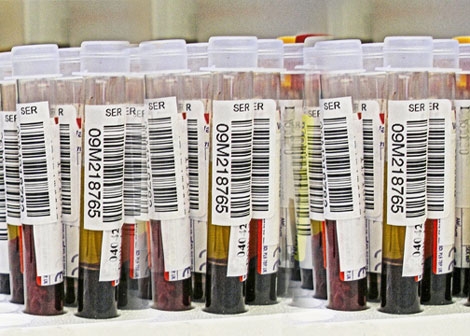
The blood test—known as Vectra DA—emphasizes the underlying biological pathways, essentially measuring inflammation. Because it doesn’t put the emphasis on external signs and symptoms, the researchers indicate that it should provide information that is different from clinical assessment. They also indicate that the test may help assess treatment response in patients. The test could show in just a few weeks whether a particular therapy is effective, rather than within three to four months as in current practice.
Also participating in the study—which involved 512 patients from three RA registries—were researchers from Leiden University Medical Center, Leiden, Netherlands; Crescendo Bioscience, Inc., South San Francisco, California; Oklahoma Medical Research Foundation; Brigham and Women’s Hospital, Boston; Rheumatology Associates of Long Island, New York; University of Texas Southwestern Medical Center, Dallas; and Mount Sinai Hospital, University of Toronto.
Dr. Curtis told OTW,
The Vectra DA test is quite simple and far easier and widely accessible than the other ways we sometimes obtain additional information that is needed (e.g. joint MRI, musculoskeletal ultrasound). Also, there is a chance that the test may serve as predictor of potential disease flare-ups, and also as a predictor of future joint damage. As for cost, if you could, for example, make a treatment decision at 2-4 weeks after starting a new drug rather than the 3-6 months that we normally wait to assess response and make a treatment decision, that would save a lot of money. It would also speed up drug development for new treatments and keep patients on placebo less time than the 12-16 weeks that is typical for phase 2 studies. These applications are tentative but exciting prospects.
Vectra DA was developed by Crescendo Bioscience, Inc. of South San Francisco.
React:
Discussion
This is a fascinating development. In my practice we've seen similar outcomes with the revised protocol. The key differentiator seems to be patient selection criteria. Has anyone else noticed the correlation with BMI thresholds?
Great point. I'd push back slightly on the conclusion, the sample size in the cited study is too small to draw population-level inferences. That said, the directional signal is compelling and worth a larger RCT.
We implemented a similar approach last year. Early results are promising but we're still gathering 12-month follow-up data. Happy to share our protocol if anyone is interested.
Join the conversation
Orthopedic professionals are discussing this. Sign in and upgrade to read every comment and add your voice.