
Back in December, Orthofix International N.V. announced an internal reorganization designed to streamline operations within the company’s three global business units: Spine, Orthopedics and Sports Medicine. The move was facilitated in part by the recent consolidation of the company’s operations into their new facility in Lewisville, Texas.
McMillan Becomes Orthofix Spine Chief
1 min read Premium comments
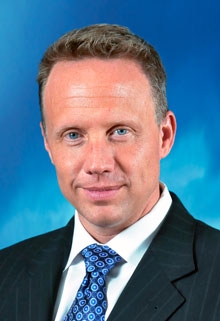
On October 4, the company announced that Bryan McMillan had been promoted to the position of president of the spine global business Unit. McMillan had been executive vice president-general manager for the spinal implants division of the global business Units since February 2011.
“Bryan has proven himself as an exceptional leader in our spinal implants business, ” said Robert Vaters, the company’s president and CEO. “I am certain that as president of the spine global business Unit, he can further drive growth while creating synergies and cross-selling opportunities between our best in class spinal implants, biologics, and our market leading spinal stimulation products.”
McMillan has been with Orthofix since March 2010 in various roles of increasing responsibilities, including vice president of global Development for spinal implants. He will be responsible for overseeing all activities of the company’s spinal implants and spinal stimulation businesses, which were previously managed separately.
Prior to joining Orthofix, McMillan held several leadership roles at Stryker Corporation including the position of vice president, Stryker Finance. In addition to his medical device industry experience, McMillan spent nine years in investment management/banking with the firms of Rauscher Pierce, Everen Securities and CIBC Oppenheimer. He received his degree in Political Science and Business from Arizona State University, and has successfully completed the Harvard Executive Leadership program and Strategic Marketing Curriculum at the University of Texas, Austin.
Author
React:
Discussion
This is a fascinating development. In my practice we've seen similar outcomes with the revised protocol. The key differentiator seems to be patient selection criteria. Has anyone else noticed the correlation with BMI thresholds?
Great point. I'd push back slightly on the conclusion, the sample size in the cited study is too small to draw population-level inferences. That said, the directional signal is compelling and worth a larger RCT.
We implemented a similar approach last year. Early results are promising but we're still gathering 12-month follow-up data. Happy to share our protocol if anyone is interested.
Join the conversation
Orthopedic professionals are discussing this. Sign in and upgrade to read every comment and add your voice.