
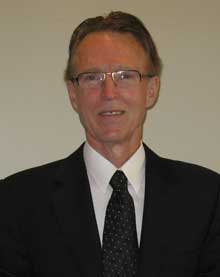
Dr. Doug Jackson, former president of the American Academy of Orthopaedic Surgeons (AAOS), is both a recipient of the now well-known and established AAOS Diversity Award, but is probably the person partially responsible for the award in the first place.
Dr. Douglas Jackson
6 min read Premium comments
Picture Of Success
The AAOS Diversity Award is presented annually to living Academy Fellows or Emeritus members who have distinguished themselves through their outstanding commitment to making orthopedics more representative of and accessible to diverse populations. Over the past eight years, recipients have been recognized for:
Actively working to reduce obstacles that prevent greater numbers of women and under-represented ethnic groups from entering the field of orthopedics in the U.S.
Teaching culturally competent care in a clinical and/or institutional setting.
Sponsoring, mentoring and/or guiding young orthopedists, culturally diverse and female medical students.
Acting as a role model to colleagues and leading by example in promoting diversity.
Staffing clinics that provide musculoskeletal care for underserved U.S. populations.
Recruiting and encouraging diverse ethnic and/or female medical and pre-med students to pursue a career in orthopedics.
Acting in a leadership role in eliminating disparities in health care and/or promoting culturally competent care.
Supporting diversity-related legislation, activities, and issues in health care.
Making a long-lasting impact on the profession’s diversity and/or on orthopedic patient care.
Writing and publishing materials that relate to culturally competent care and/or health care disparities.
Dr. Jackson was this award’s 2010 recipient—and probably the only recipient whose childhood included time in a mental institution.
Life began for Dr. Jackson in South Dakota. The Jackson family moved when he was very young to Spokane, Washington, which is where he grew up. Much of Dr. Jackson’s childhood was spent on the grounds of the mental institution where his father was a staff member. “My father was the administrator, ” recalls Dr. Jackson, “and I had ample opportunity to discuss medicine and mental health with the staff, as well as the chance to interact with and observe the patients. I could see that these people were suffering, and for a while, I was set on helping people by pursuing a career in psychiatry.”
“At first I was interested in schizophrenia and began an M.D./Ph.D. program in Experimental Pathology and Psychiatry. One summer while I was working with tissue cultures, isolating enzymes and trying to get the cells to produce different enzymes and proteins, I found that they got infected with a new bacteria. I became frustrated and thought, ‘It will be 50 years before we know how to do this.’ During that time I did a rotation on orthopedics and had an outstanding experience with Dr. Kay Clausen, the chair at the University of Washington in Seattle. I was hooked…my mind had been changed for me.”
Doug Jackson would go on to train with the esteemed Dr. John Feagin at the United States Military Academy, treat Olympic athletes, and bring lasting change to the field of orthopedics.
The Vietnam years were particularly formative for Dr. Jackson. “During Vietnam I spent two productive years at West Point where I worked alongside Drs. John Feagin, Jim Nicholas, Anthony DePalma and Charlie Neer. It was an exciting time to be learning about the knee and shoulder, with sports medicine in its infancy and the arthroscope having just made its way to the U.S. I was fascinated by the knee in particular because it is the largest joint in the body, is the most common reason that people see orthopedists, and provides the opportunity to treat patients of all ages. Also, because John Feagin was a veteran with regard to Academy participation, he spent time teaching me the ins and outs of the organization.”
From the ins and outs to the top post, Dr. Jackson had clear goals and plans for the organization that he cherishes. “I had served AAOS in a number of capacities through the years, and could see that there were several concrete changes that would really help strengthen the community of orthopedists. First of all, we needed to have both a C-3 and C-6 tax status so that we could spend more resources on lobbying activities.”
While I ended up encountering strong resistance to us becoming a for profit entity, I helped convinced people that we needed to make this change because no one was really speaking out for our profession, our members, or our patients…we needed a more effective political action committee (PAC).
“Changing our status did so, and in the end further contributed to us being a more influential group that allows us to build coalitions with other medical organizations and patient groups to pursue common interests.”
Dr. Jackson’s second goal as head of AAOS evolved from his sitting across from patients and thinking, “I need a translator in here.” “It hit me that we had 86 dialects in the Long Beach, California, school system…and I found it disconcerting that I would sit across from, say, my Cambodian patients and not understand what they were telling me. It was obvious that they would be better served by someone from their own community.”
His attempts to open up the field to those outside of the traditional boys club were at times met with scorn. Dr. Jackson: “I also wanted to attempt to bring more women into the field. My goal was to eliminate unintended barriers and then, if women didn’t choose orthopedics, then that was fine.”
When I started this effort there were many programs that had never had a female orthopedist. I actually received several angry letters from orthopedists saying that they had daughters and that there was no way they would let them become orthopedic surgeons because they were not strong enough and because of the long hours.
“In the end, I was able to appoint a diversity study group and subsequently a committee that reported directly to the Board of Directors. The diversity initiatives were eventually institutionalized within the Council structure.”
Dr. Jackson’s other substantial goal involved one of the most critical, yet difficult, issues facing the field. “I saw that we had 600 new people coming into orthopedics each year, and thought that if we could encourage even two or three of them to become clinician/scientists, then the field would be strengthened. This is no small task, as the person really needs a Ph.D. (or the equivalent in research methodology) in a specific area…and acquiring the necessary research skills usually takes three years. It’s more difficult for some specialties—and, many universities require that doctors generate their own income. It’s a unique person who can be a successful clinician/scientist…and remember, you’re competing against people doing it full time.”
Having been in the lab trenches, Dr. Jackson knows of what he speaks. And he walks the walk with his wallet. “Fresh out of residency I went searching for an academic position that would be focused solely on sports medicine and knee surgery…a luxury at the time. I decided to enter private practice and put 25% of my income back into research. That way, the funds would always be available and I would be in control.”
“It took ten years to build a private lab, but I had a full staff engaged in a variety of different kinds of projects. One of the most interesting was our goat model. At the time, companies didn’t have to prove that their products worked, they just had to demonstrate that they were safe—then you could commence human studies. Large companies started contracting out lab work; we were well positioned because we could make decisions quicker. A company could bring us its product and we would put it into our model and tell them what the cells would be doing in six weeks and three months. We had the ability to compare each scenario to hundreds of other similar situations that we ‘ran.’ Even today, more than 20 years later, my associates are continuing this work.”
When asked about the most critical issues facing orthopedic surgeons today, Dr. Jackson says that “simply” staying relevant is a challenge. “Orthopedists are facing a lot of turmoil regarding changing practice models, and are increasingly becoming salaried and giving up control. I think that young surgeons are having to make decisions that we veteran orthopedists never had to face. For example, they must choose what model to follow—and, critically, they are supposed to know how that will impact their practices years from now…something that is almost impossible to know.”
“Once you get into practice you have a ten year half-life where your education keeps you current. Then, if you don’t keep learning you start to lose your footing. By your third decade in practice you can drift and become out of touch. This is only amplified if you have problems with family, alcohol, or prescription drugs. And remember, the public expects a doctor to be committed for a lifetime.”
Dr. Jackson, who says that if you don’t want complications you shouldn’t operate, has found ways to deal with the stress of the profession. “I’ve participated in endurance events and athletic activities, and regularly take time away with my wife and family.”
Dr. Douglas Jackson…diversity and excellence for a lifetime.
React:
Discussion
This is a fascinating development. In my practice we've seen similar outcomes with the revised protocol. The key differentiator seems to be patient selection criteria. Has anyone else noticed the correlation with BMI thresholds?
Great point. I'd push back slightly on the conclusion, the sample size in the cited study is too small to draw population-level inferences. That said, the directional signal is compelling and worth a larger RCT.
We implemented a similar approach last year. Early results are promising but we're still gathering 12-month follow-up data. Happy to share our protocol if anyone is interested.
Join the conversation
Orthopedic professionals are discussing this. Sign in and upgrade to read every comment and add your voice.