
Not much had changed in North Dakota between 1860 and 1960—except perhaps cars and electricity. The one room schoolhouse, for example, was still there when the future president of three different surgeon societies, Vernon Tolo, sat down on a wooden bench to begin a lifetime of learning. In the wind swept expanses of North Dakota, pioneers didn’t choose the land, it chose them. And scratching a living out of the sea of grasses known as the prairie created a special breed of person.
Dr. Vernon Tolo
6 min read Premium comments
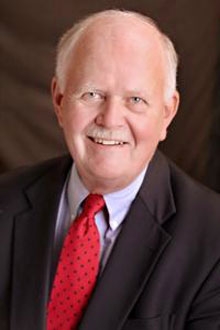
Picture Of Success
When you can stand on a small hill, for example, and see to the curve of the earth, you learn the true meaning of vision and possibilities.
“The town I was raised in had 75 people, ” remembers Dr. Tolo. “In that kind of environment you have to learn to appreciate what each person brings to the table. That was when I learned to lead by consensus.”
“People remember you for how you treat them not for what you accomplish.” Wise and kind-hearted, Vernon Tolo would have been a good minister…if he had decided to follow in the family footsteps. “We had nine ministers in our family—including my father—and at one point I received a scholarship to a theological seminary. I was a substitute minister for a while, but decided to go into medicine because I could help people concretely and counsel them somewhat.”
Today, as Dr. Tolo looks back at the formidable arc that describes his career, this former president of the American Academy of Orthopaedic Surgeons (AAOS), former president of the Pediatric Orthopaedic Society of North America (POSNA) and former President of the Scoliosis Research Society (SRS), recalls several key milestones in his life.
At one point, for example, he saw the handwriting on the far-off wall…and it said, “Where have all the orthopedists gone?” Dr. Vernon Tolo was concerned about the society-wide trend of individualism that was resulting in decreased participation in organizations.
“During my tenure at the helm of AAOS I read the book, ‘Bowling Alone, ’ which discusses the increasing tendency for people to drop out of group participation.”
I wanted to try to head off any trend for declining participation from AAOS members and loss of leaders in the years ahead…particularly with the dramatic decline in participation by U.S. doctors in the AMA from about 65% in the mid-60s to 25%-30% in 2000.
His solution? Create leaders. “I established the AAOS leadership fellows program, an effort whereby people under the age of 40 spend a year with a mentor who was experienced with the Academy. It has been a real success, with many more applications received than places available.”
In teaching younger orthopedists, Dr. Tolo highlights the thread that runs through both the ministry and medicine…listening. “I tell residents and fellows that if they ask a question of a patient that they need to listen to the answer. It sounds obvious, but everyone is so busy that the patient’s perspective can get short shrift. Since I interact with children it is especially important because their thoughts and concerns can easily get pushed to the background.”
Kids just “are.” They are hurt and they want help…it’s very straightforward. “We pediatric orthopedists never have to worry about a workers compensation situation with children; there is never any secondary gain. More than anything else, working with young patients who have scoliosis and spinal deformities has changed my career. They are so appreciative and are much more resilient than older patients.”
So how did he come to orthopedics in the first place? “It was a joyful, radical shift in my life when I was accepted to Johns Hopkins medical school. I did two years of general surgery at Hopkins after med school and was headed for cardiothoracic surgery when I was called up by the Army. I was assigned to orthopedics and the rest is history. Why? Because in general surgery there were higher rates of death, whereas with orthopedic patients I had a good chance of improving people’s lives. During my time working at Valley Forge General Hospital, we had 350 orthopedic inpatients and 120 coming in every week from Vietnam. Fortunately, we had thorough teaching conferences—it was almost like a residency.”
Dr. Tolo’s love of orthopedics led him to want everyone to know the wonders of this field. As head of AAOS, he consistently advocated for further opening orthopedics to women and minorities. When asked how he came to care so much about this issue, Dr. Tolo replied, “I grew up in a very homogeneous population of whites of Scandinavian heritage.”
When I went to medical school at Johns Hopkins in 1964 I was surprised to find racially-segregated hospital wards. I don’t consider myself to be a crusader but I wanted to use what influence I had to open up opportunities for under-represented individuals—both women and racial minorities—to become orthopedic surgeons.
“Also, it has been shown that patients of minority groups often prefer being treated by physicians from a similar background.”
“Regarding women, with medical school classes being around 50% women, orthopedics is missing out on some of the best and brightest if we do not provide role models and opportunities for women to select orthopedics for their life work. I am fully cognizant that including more women and minorities in our field is a long term goal…I am glad, however, that we have made some progress.”
As the editor of the Journal of Bone and Joint Surgery, Dr. Tolo is in a good position to witness other trends in the field. “Manuscript submissions rise just about every year…we received over 2100 manuscript submissions in 2010. Of those, we only accepted 18% for publication. We are seeing more submissions from China and India, with some of the best studies coming out of the Scandinavian countries. This is because everyone there has a health number and can easily be tracked; that means they can do a lot of randomized controlled trials (RCTs). Physicians in the U.S. see it as hard to do RCTs on surgical patients; it’s not easy, but it can be done.”
Even Dr. Tolo, who says that he thrives on optimism, can feel that his efforts are being thwarted. “Within a year of completing my fellowship in pediatric orthopedics in Toronto, I had become the chief of pediatric orthopedics at Hopkins, I got my first lessons in the frustrations of administration. Developing that program was a real mountain climbing effort, with the focus in academic orthopedic programs being on adult orthopedics more than on kids. My advice to those in the position of program development is: assess the current situation, find out what needs particular attention, and work on those things one by one. You’ll need a multiyear operations plan that involves realistic opportunities based on resource availability.”
Dr. Tolo spent 11 years refining his administration skills at Johns Hopkins. “I’m proud to say that by the time I left in 1987 we had become one of the premier treatment facilities for scoliosis. Part of how I developed this program was that I spent a lot of time talking to school groups and parent organizations. When I first came here to Children’s Hospital Los Angeles I was the first full time pediatric orthopedic surgeon. Also, neither the academic program nor the research efforts were especially strong. Now we have nine full time pediatric orthopedists, several endowed chairs, and a great gait analysis lab.”
Reflecting on the changes in pediatric orthopedics, Dr. Tolo states, “Years ago we did all kinds of orthopedic surgery on the pediatric patients, whereas now pediatric orthopedists are even specializing more (hip/spine/tumors, etc.). Advances in imaging have changed what we are able to do, such as in tumor surgery, where we now are able to identify exactly where a tumor is and go in and treat it expeditiously.”
As for the future of his subspecialty, says Dr. Tolo, it’s not always sexy. “In pediatric trauma there is an increasing focus on injury prevention. It’s not ‘sexy, ’ but it’s important…20 times more kids die of trauma than cancer every year.”
“Also, there is room for improvement in our understanding of certain conditions…we just don’t know what causes a lot of disorders such as clubfeet, dislocated hips, etc. Ideally, we would be able to determine if and/or how stem cells could be applicable to some of the other congenital and genetic conditions in children. Also, I would love to see ways to enhance fracture healing that wouldn’t involve as many surgeries or as much casting.”
When not musing about the field, he gives thanks for his family. “Charlene and I have been married 46 years and she has been my greatest supporter throughout. I have a son in Boston who is an orthopedic surgeon, and a daughter in San Francisco who is a book design editor. Unfortunately, I don’t see my six grandsons enough. I have played all kinds of sports in the past, but mainly like to swing a golf club now. Non-orthopedic reading is also a pastime, and I’m now ‘stuck on’ Scandinavian mystery writers.”
Dr. Vernon Tolo…a leader who never lost his ability to see possibilities.
React:
Discussion
This is a fascinating development. In my practice we've seen similar outcomes with the revised protocol. The key differentiator seems to be patient selection criteria. Has anyone else noticed the correlation with BMI thresholds?
Great point. I'd push back slightly on the conclusion, the sample size in the cited study is too small to draw population-level inferences. That said, the directional signal is compelling and worth a larger RCT.
We implemented a similar approach last year. Early results are promising but we're still gathering 12-month follow-up data. Happy to share our protocol if anyone is interested.
Join the conversation
Orthopedic professionals are discussing this. Sign in and upgrade to read every comment and add your voice.