
Michael T. Harris, M.D., an interventional pain medicine physician, has joined the Andrews Institute for Orthopaedics & Sports Medicine. Dr. Harris is a fellowship-trained physician with clinical interests in acute and chronic pain management, headache and neuropathic facial pain, sports medicine, and non-operative orthopedic care.
Dr. Michael Harris Joins Andrews Institute
1 min read Premium comments
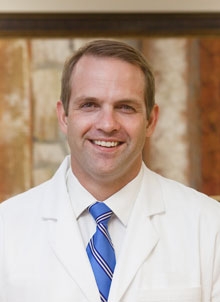
After completing his medical training at Tulane University School of Medicine in New Orleans, he did a physical medicine and rehabilitation residency at the University of Michigan Hospital in Ann Arbor, and an ACGME-accredited pain fellowship at the University of Michigan.
Asked what specifically he hopes to bring to patient care, Dr. Harris told OTW,
“With a background in Physical Medicine and Rehabilitation (PMR) as well as Anesthesia Pain Medicine, I hope to bring a complete multi-disciplinary model to treat acute and chronic orthopaedic-related pain. My background in PMR allows me to more fully diagnose musculoskeletal and neurological disease states and prescribe comprehensive rehabilitative options, my background in anesthesia pain medicine allows me to deliver accurate interventional spine and peripheral nerve injection procedures when indicated to alleviate pain for a variety of orthopaedic complaints.”
As for what training experience has best prepared him for this new role, Dr. Harris commented to OTW,
“The unique combination of PMR and an ACGME-accredited pain medicine fellowship has given me a more complete approach to diagnosing and treating orthopaedic pain conditions. In PMR we are not only trained in how to treat general musculoskeletal injuries but neurological diseases such as spinal cord injuries, stroke and peripheral nerve complaints. The pain fellowship has given me the skills to tackle these problems on not only a rehabilitation level but also on an interventional level.”
React:
Discussion
This is a fascinating development. In my practice we've seen similar outcomes with the revised protocol. The key differentiator seems to be patient selection criteria. Has anyone else noticed the correlation with BMI thresholds?
Great point. I'd push back slightly on the conclusion, the sample size in the cited study is too small to draw population-level inferences. That said, the directional signal is compelling and worth a larger RCT.
We implemented a similar approach last year. Early results are promising but we're still gathering 12-month follow-up data. Happy to share our protocol if anyone is interested.
Join the conversation
Orthopedic professionals are discussing this. Sign in and upgrade to read every comment and add your voice.