
Champagne was probably popped…Joseph M. Lane, M.D., chief of the Metabolic Bone Disease Service and medical director of the Osteoporosis Prevention Center at Hospital for Special Surgery (HSS) was recently feted at a grand gala where he received a Lifetime Achievement Award from HSS. Dr. Lane’s research helped identify the possible link between long-term use of osteoporosis medications and increased risk for certain types of bone fractures.
Lifetime Award for Joseph Lane, M.D.
2 min read Premium comments
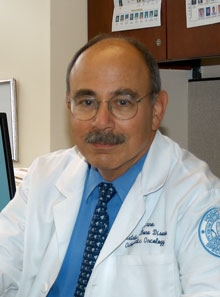
Dr. Lane began his tenure at Hospital for Special Surgery in 1975 and went on to become professor at Weill Cornell Medical College and an adjunct professor at the Columbia University College of Physicians and Surgeons. He is also associate director of the Orthopaedic Trauma Service at Hospital for Special Surgery.
Dr. Lane’s clinical research has focused on bone and soft tissue tumors, adult spine and hip trauma, spinal surgery and osteoporosis. He has received many NIH (National Instituts of Health) career and R01 grants, Orthopaedic Research and Education Foundation (OREF) grants, and foundation awards and has authored more than 300 published articles and chapters.
“By identifying the possible link between long-term bisphosphonate use and certain types of unusual bone fractures as part of his ongoing studies, Dr. Lane continues to keep the hospital on the forefront of bone research, ” said Thomas P. Sculco, M.D., in the June 16, 2011 news release. Dr. Sculco, Surgeon-in-Chief at Hospital for Special Surgery, said, “Dr. Lane is one of the great teachers and research minds in orthopedic surgery.”
“I am truly humbled by this award, ” added Dr. Lane. “The hospital has provided unwavering support as I have grown in my career, and I am eternally grateful for that. I look forward to continuing to work with my brilliant colleagues and to helping patients regain the mobility needed to maintain their active lifestyles.”
Dr. Lane graduated Magna Cum Laude from Columbia College in 1961 and received a medical degree from Harvard Medical School in 1965. He then went on to the Hospital of the University of Pennsylvania, where he completed his internship in 1967, fellowship in 1970, and residency in 1973, during which he was awarded the Kappa Delta Award from the American Academy of Orthopaedic Surgeons for his research on inhibiting scar formation.
When asked about one of his favorite memories from the lab, Dr. Lane told OTW,
We had reported a new type of hip fracture related to prolonged bisphosphonate use. Working with Adele Boskey, Ph.D., we uncovered the fact that even thick bone becomes weak when it ages and loses the ability to renew itself. As a consequence of this discovery we have developed the clinical concept of a ‘bone holiday’ that means stopping the osteoporosis drugs and allowing the bone to rejuvenate itself.
React:
Discussion
This is a fascinating development. In my practice we've seen similar outcomes with the revised protocol. The key differentiator seems to be patient selection criteria. Has anyone else noticed the correlation with BMI thresholds?
Great point. I'd push back slightly on the conclusion, the sample size in the cited study is too small to draw population-level inferences. That said, the directional signal is compelling and worth a larger RCT.
We implemented a similar approach last year. Early results are promising but we're still gathering 12-month follow-up data. Happy to share our protocol if anyone is interested.
Join the conversation
Orthopedic professionals are discussing this. Sign in and upgrade to read every comment and add your voice.