
Olympus Biotech, the company founded in 2010 by Japan-based Olympus Corporation to take over Stryker’s Osteogenic Protein-1 (OP-1) product, has named a president.
Burckhardt Given OP-1 Leadership
1 min read Premium comments
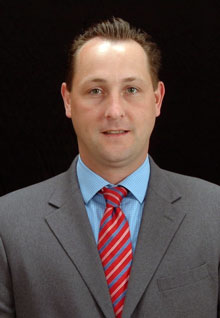
The company appointed Scient’x Corp’s former international president and CEO, Oliver Burckhardt to the post on May 23. Burckhardt had stayed on with Alphatec when the company acquired Scient’x early last year.
Burckhardt has also served as president of Orthofix, Inc., where he was responsible for the global spine business unit. Prior to that, he spent nine years with Aesculap, Inc. in various sales and marketing positions, including vice president of sales and marketing for the Aesculap Spine division in the United States.
“The vision of Olympus Biotech to advance into regenerative medicine is the next logical step in the treatment of many medical pathologies and conditions, ” said Burckhardt in a company press release.
Olympus has a long history in regenerative medicine. In one related field, the company signed a licensing agreement with Kaken Pharmaceutical Co., Ltd. concerning the development, manufacture and sale of basic fibroblast growth factor (bFGF) for use in wound healing applications and is working to commercialize bFGF products for the European and North American markets. A subsidiary, Olympus Terumo Biomaterials Corp., has built a regenerative medicine business centering on biomaterials and has already brought a number of products to the orthopedic market, including the bone void filler OSferion and Boneceram, and the artificial dermis TERUDERMIS.
The company’s establishment of Olympus Biotech last year and acquiring the OP-1 assets was, “to develop its involvement in regenerative medicine business more globally and on a larger scale.”
Added Burckhardt, “I am excited about the overall strategic thinking and the assets that are already in place, within Olympus, which represent a perfect starting point for this future oriented strategy.”
Author
React:
Discussion
This is a fascinating development. In my practice we've seen similar outcomes with the revised protocol. The key differentiator seems to be patient selection criteria. Has anyone else noticed the correlation with BMI thresholds?
Great point. I'd push back slightly on the conclusion, the sample size in the cited study is too small to draw population-level inferences. That said, the directional signal is compelling and worth a larger RCT.
We implemented a similar approach last year. Early results are promising but we're still gathering 12-month follow-up data. Happy to share our protocol if anyone is interested.
Join the conversation
Orthopedic professionals are discussing this. Sign in and upgrade to read every comment and add your voice.