
There is a quote by the poet Masahide that goes, “My barn having burned to the ground, I can now see the moon.” It is unlikely, however, that a young Randy Rosier and his family were feeling quite so philosophical as they watched their home burn to the ground years ago. Indeed, tough times have both strengthened Randy Rosier and softened him to the suffering of others.
Randy Rosier, M.D., Ph.D.
7 min read Premium comments
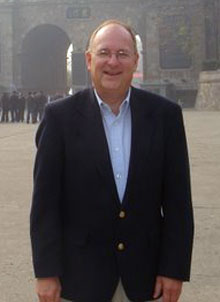
Picture Of Success
Dr. Rosier, a former Chair, and now a professor in the Department of Orthopaedics at the University of Rochester Medical Center, also stands out in the research arena. He received the Alfred R. Shands Jr, MD Award from the American Orthopaedic Association and the Orthopaedic Research Society, as well as the prestigious Kappa Delta Award for Outstanding Orthopaedic Research. And he can make a claim that outshines virtually all others in the orthopedic research world: he built (with a lot of help from his colleagues) a program that for years received more funding from the National Institutes of Health (NIH) than any other orthopedic program in the United States.”
Dr. Rosier: “I grew up on a farm in central Pennsylvania, something that gave me a deep appreciation for nature. There were plenty of animals around, which led me to consider the study of biology. But I was also interested in math, so I planned to study the synthesis of science and math—physics—in college. We didn’t have much money…but I would become the first person on the family tree to attend college.”
Yet by the time the college years rolled around, the Rosier family had already seen more than most families have to bear. Dr. Rosier explains, “One fateful day when I was seven years old a heater exploded and burned down our home…we had no insurance. This, coupled with the fact that my parents had three sons who died as infants from a genetic neurologic disease, meant that our family had to pull together in order to survive. I was taught to persist at all costs. As a clinician I can look into people’s eyes and better understand their suffering because I know what suffering looks and feels like. And in orthopedic oncology you do need a special kind of compassion.”
Although he works with human beings, chondrocytes, and cartilage now, Dr. Rosier’s hands-on talents once involved molten material. “My dad was a welder who took me under his wing and taught my brother and me how to use tools, build things, and think ‘on the fly.’ My mom, who had the fortitude to survive our family tragedies, was a superb role model.”
When Randy Rosier was being drawn in by a variety academic interests, it was an in-the-know advisor who pushed him to consider a novel path. “Physics, biology…I didn’t know what to do. My college advisor—who was the Chair—said very matter-of-factly, ‘I know what you should do. You should enter one of these new M.D./Ph.D. programs where you can study medicine, biology, and even attend graduate school in biophysics.’ The lightning bolt hit. At my advisor’s suggestion, I sent off my application to the University of Rochester.”
And he sent off his paperwork on a wing and a prayer. “I was scraping to get by financially, and had no idea how I would pay for this fantastic program. The day I received a note saying that not only had I been accepted to Rochester’s M.D./Ph.D. program, but that I would be fully funded…well, I nearly passed out with joy.”
While Randy Rosier had little to work with financially, he was blessed in that his creativity and resourcefulness burst forth…and pointed him right in the direction of orthopedics. “I had built all of the furniture in my apartment, and it felt very natural to work with my hands. One day at Rochester I had an epiphany. I was taking a class on membrane transport calcium and was scrubbing in on orthopedic procedures and it hit me—‘Hey, I am interested in calcium metabolism and transport and this orthopedics thing seems like a great tie in—and I get to work with my hands.’”
When the orthopedic societies came calling years later, it was also in recognition of Dr. Rosier’s brain.
In 1995 I was honored with the Kappa Delta Award for Outstanding Orthopaedic Research. This was in recognition for my work on how growth factors regulate cartilage growth. Borrowing a technique from hematologists, I used a centrifuge to separate different types of blood cells based on size. From that work I was able to publish several papers discussing at what stage specific genes were being expressed.
The Alfred R. Shands Jr, MD Award was bestowed on Dr. Rosier for his lifelong contribution to cartilage research. Of his continued work in this area, Dr. Rosier notes, “We are now trying to understand how to harness existing growth factors or drugs in order to change the program of events that happens in arthritis. This is based on the idea that the parathyroid hormone receptor is expressed in the growth plate but is not expressed in normal joint cartilage. We have found that when there is an injury or arthritis there is very early expression of this receptor. I spent five years developing models where we could create arthritis in mice, and we found that it was possible to partially reverse the arthritis by treating the mice with Forteo. We are now trying to get a grant for a pilot clinical trial in humans.”
“My team and I recently mined the extensive Osteoarthritis Initiative database and found 20 patients that during the time they were being monitored were put on Forteo. We found that there was a dramatic—and statistically significant—improvement in those taking Forteo as compared to the controls.”
Dr. Rosier, who served as the Chair of orthopedics at Rochester for seven years, had the structure to do such elaborate work. Why? Because he created it. But there was more to come…“When I became chair I established the Center for Musculoskeletal Research; later I was able to secure a $7.8 million NIH grant so that we could become a Center for Research Translation, something that is enabling us to perform clinical studies that will lead to improved treatments for a variety of orthopedic conditions. I consider these to be the standout accomplishments of my professional life.”
Looking back down the mountain he has climbed, Dr. Rosier talks of a time when he had to forage for resources…and in doing so found his rallying cry—enough! Dr. Rosier: “When I was a junior faculty member at Rochester I was being promised sufficient OR time, but it wasn’t happening. I was a tumor surgeon working on children with cancer, and these were massive surgeries whose timing was critical. It’s not like a meniscus surgery where you can wait a month. I would get pushed to the tail end of somebody’s OR day, and would have to start a long, complex surgery in the afternoon or early evening. The anesthesiologists ran the ORs and they would start canceling cases mid afternoon. I would have patients and families waiting all day for surgery, and it would get cancelled (and this happened repeatedly). Finally, it was the parents who drove me to action.”
I walked into the Chair’s office and said, ‘I know you are busy and I am not a complainer but if I don’t have my own OR block within 30 days I won’t be here.’ I was tired of families screaming at me (albeit understandably), and was fed up with having to do surgeries at midnight. Nowadays, I pass this lesson on to my trainees: advocate for yourself and for your patients.
Dr. Rosier knows how to get his ideas across, but he also knows how to make room for the ideas of others. When asked about the reasons for his success, he reflects, “When I was hiring faculty, many ‘newbies’ had grand ideas about having their own labs and making breakthrough discoveries. I told them that they needed to join a team of people who were already working on something they were interested in. For one thing, who is going to keep your experiments going when you are called to the OR for an emergency? I tell them that no one is going to discover the cure for cancer by themselves. Being a good team builder and team player has served me—and my patients—well.”
But even the most impressive team cannot always prevent what nature brings on. “The most frustrating parts of my career are those times that I have performed a complex surgery to remove a cancer and then, despite a successful surgery, the cancer returns.”
To up-and-coming surgeons Dr. Rosier says, “When you fail…and you will…keep in mind that this type of thing happens to every one of us eventually. Most of us are ethical and will naturally feel horrible when something goes wrong. It’s the people who are not fazed by mistakes or complications who worry me. I think that if you don’t have the appropriate emotion then perhaps you are not going to learn as much from the situation. Frankly, those people who just blithely move on to the next case tend to be those individuals who are driven by financial motives.”
He adds, “Clinicians should always maintain a strong sense of curiosity and ask themselves why they are doing something, why such and such happens, and how it happens. The majority of my research has evolved from things that I have observed at the bedside that led me to ask questions.”
Given that he is so thorough, anyone walking into Dr. Rosier’s self-built house should feel comfortable that the walls will stay up. “I designed and built my house…everything…the kitchens, wiring, cabinetry, etc. I revel in creating things. Actually, I think I have a half built violin around here somewhere. Fundamentally, I enjoy my life. And I owe who I am to my parents, who were totally ethical, honest people.”
Dr. Randy Rosier…using the lessons from his own life to rebuild lives, assemble careers and construct the foundations for the scientific future of orthopedics.
React:
Discussion
This is a fascinating development. In my practice we've seen similar outcomes with the revised protocol. The key differentiator seems to be patient selection criteria. Has anyone else noticed the correlation with BMI thresholds?
Great point. I'd push back slightly on the conclusion, the sample size in the cited study is too small to draw population-level inferences. That said, the directional signal is compelling and worth a larger RCT.
We implemented a similar approach last year. Early results are promising but we're still gathering 12-month follow-up data. Happy to share our protocol if anyone is interested.
Join the conversation
Orthopedic professionals are discussing this. Sign in and upgrade to read every comment and add your voice.