
If you manage a medical device company and you want to get your innovative new products to market faster but ALSO cut your R&D costs and stay on the cutting edge of technology maybe the impossible is possible if you look south of the border.
Forget Asia, World Class R&D Outsourcing in Mexico
5 min read Premium comments
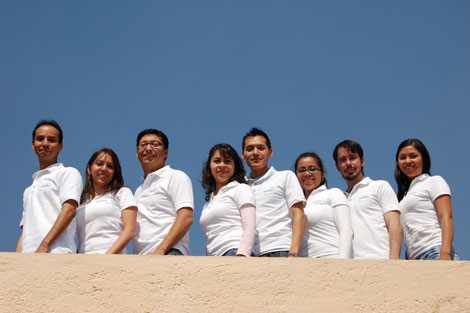
For world class new product design and development work as well as clinical trial design and implementation you might want to talk with David Hite. Hite is the CEO of Alandra Medical, Inc. located in San Geronimo, a suburb south of Mexico City, Mexico.

David Hite, CEO – Alandra Medical, Inc.It is Hite’s location in Mexico that, he says, gives him his competitive edge. As he explains it,
Medical device innovators, who need design and development service, get their most efficient use of capitol by working with us.
Alandra Medical, Hite says, offers the same quality design and development expertise that is found in the United States. The difference, he says, is that he “operates under a very favorable cost structure by basing the business in Mexico.” Given his cost structure, he claims, his clients can make more efficient use of their capital. With Alandra Medical a company’s investment dollars develop more.
Hite’s company is made up of 35 mostly doctors and biomedical, electrical and software engineers who offer clients three areas of expertise. The first is in conception and design leading to the development of an early prototype. Hite says his firm is exceptionally good at getting the original concept out of the innovator’s mind, working it through the design stage, turning it into a 3-D model and taking it to early prototypes where a client can then do animal studies and cadaver trials.
The second area of expertise is in the convergence of electronic equipment with software development. “We benefit from 15 years of intellectual capital working on a handful of our own ideas, developed in Mexico. We have several projects in later stage development—all done within our own shop, ” he said.
The third division is a clinical trial group inside of Alandra, “We can conduct clinical trials within Mexico for either animal or human studies, ” said Hite.
A fourth dimension is one that Hite believes may make Alandra unique. It relates to the fact that Alandra is backed by a venture capitol firm. As Hite puts it,
We have a high recognition of the value of equity in the best innovations. We have our own internal scientific evaluation and investment criteria and may create a strategic partnership with our client. We will provide the service for a piece of equity in the company or on the client’s innovation.
While the names of the firms’ clients are protected by confidentiality agreements, some of its products are illustrated on the company’s web site (http://alandramedical.com/). Among them is an epidural space localizer, a novel nasal airway device, a migraine headache mitigation device, a device for the early detection of cervical cancer and an electromagnetic device for chronic wound treatment. The company is also working on a device for the home care of the diabetic foot.

Alandra Medical expects to complete three ISO certifications by May. Two are the ISO standards 13485:2003 and ISO 0991:2008 related to a comprehensive management system for the design and manufacture of medical devices. The third is ISO 14971 that represents the requirements for a risk management system for medical devices. The projects the firm completes for its clients are run using the Project Management Institute’s (PMI) Project Management Body of Knowledge.
 All Alandra project managers are PMI certified. Hite believes that intellectual property is better protected in Mexico than it is in Asia because of the enforcement provisions for IP contained in the NAFTA agreement.
A Californian, Hite has spent most of his working years outside of the U.S. His first nine years, after graduating from college in 1984, he worked in Silicon Valley. Then Intel hired him and he began his life abroad, living in China (two times), Hong Kong, Singapore, Brazil, Colombia and Mexico. Though much of his work was in sales and marketing, during his final years with Intel he worked closely with engineering teams in design, development and manufacturing work. His final assignment at Intel was as world-wide director of platforms for emerging markets. He left the company in 2007 when it asked him to return to the United States in a headquarters management position.
Hite came into Alandra Medical three months after its founding by Gerber Capitol Venture Equity Fund which brought together the assets of two Mexican medical device companies and one California-based medical device company. Hite said that they “selectively chose intellectual property and brought over what they believed to be the most talented of the intellectual capitol.” Alandra Medical was formed from the fusion of these two Mexican medical device companies, one medical device company from the United States and the venture capital firm.
He was hired as CEO, Hite said, based on his solid U.S. business and management skills, because of his long affiliation with a U.S. multi-national corporation and his awareness of and sensitivity to working in Latin American and other culturally diverse markets.
Questions of distance and of the drug problem invariably come up. “Being an American living in Mexico I get emails from friends asking me if I am not afraid to live here, ” he said. “Unfortunately, the drug business in Mexico operates as any large business does. The leaders are very affluent people who like to live in the wealthy large cities, but also close to their market. The larger cities of Mexico, which are located close to the U.S. border, are the home base of that industry. The drug dealers not only enter into conflict with the policing of the border, but with their competitors. To put it in sales terms, it is conflict over ‘territory management.’ The vast majority of everyone living in Mexico live lives completed separated—isolated—from that kind of violence.”
As for the problem of distance, Hite does not believe it is a problem. “The Internet is a way of life, ” he said, “We are able, with video, to share files and keep the client up to date and very comfortable with the design and development process. In Asia and Europe it happens every day.” The company has sales offices in the U.S. operating out of Palo Alto, California and Phoenix, Arizona. Through a cooperative technology agreement between the U.S. and Mexico, Alandra Medical has access to medical device segments through five other offices in the U.S. and Canada.
All in all, Hite makes a very compelling case for looking to Mexico for world class medical technology design, development, clinical testing and eventual commercialization. Sometimes, the keys to the future are right in our own backyards.
Author
React:
Discussion
This is a fascinating development. In my practice we've seen similar outcomes with the revised protocol. The key differentiator seems to be patient selection criteria. Has anyone else noticed the correlation with BMI thresholds?
Great point. I'd push back slightly on the conclusion, the sample size in the cited study is too small to draw population-level inferences. That said, the directional signal is compelling and worth a larger RCT.
We implemented a similar approach last year. Early results are promising but we're still gathering 12-month follow-up data. Happy to share our protocol if anyone is interested.
Join the conversation
Orthopedic professionals are discussing this. Sign in and upgrade to read every comment and add your voice.