
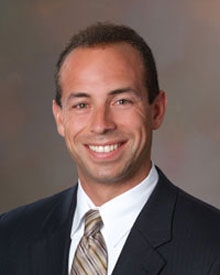
Dr. Derek Cuff, an orthopedic surgeon at Suncoast Orthopaedic Surgery & Sports Medicine, has been awarded the Charles Neer Award, given annually by the American Shoulder and Elbow Surgeon society to recognize the surgeon whose clinical research has made a major contribution to the understanding, care and prevention of injuries to the shoulder and elbow.
Dr. Derek Cuff Wins Neer Award
1 min read Premium comments
In 1985, Charles S. Neer II, M.D. created a fund to provide recognition for outstanding clinical investigation. Named after its benefactor, this award has been presented annually since the first open meeting of the American Shoulder and Elbow Surgeons. In 1987, the award was expanded to include both clinical and research categories.
The top-graded papers are selected by the program committee from the numerous abstracts submitted each year. The chosen Neer Award manuscripts are then reviewed and graded by the research committee to determine the final winners. No one who has a manuscript under consideration may evaluate the papers.
Dr. Cuff’s recent work is focused on rotator cuff repairs and accompanying physical therapy. He also has a professional interest in minimally invasive arthroscopic procedures and reverse shoulder replacement.
Dr. Cuff earned his medical degree at the University of Maryland School of Medicine in Baltimore and he completed his residency at the University of Maryland Medical System and Johns Hopkins Hospital. Dr. Cuff’s additional training includes a shoulder and elbow fellowship at the Florida Orthopaedic Institute in Tampa.
Author
React:
Discussion
This is a fascinating development. In my practice we've seen similar outcomes with the revised protocol. The key differentiator seems to be patient selection criteria. Has anyone else noticed the correlation with BMI thresholds?
Great point. I'd push back slightly on the conclusion, the sample size in the cited study is too small to draw population-level inferences. That said, the directional signal is compelling and worth a larger RCT.
We implemented a similar approach last year. Early results are promising but we're still gathering 12-month follow-up data. Happy to share our protocol if anyone is interested.
Join the conversation
Orthopedic professionals are discussing this. Sign in and upgrade to read every comment and add your voice.