
The FDA announced a new Innovation Initiative on February 8 for promising devices and technologies.
Device Trends for 2018
7 min read Premium comments
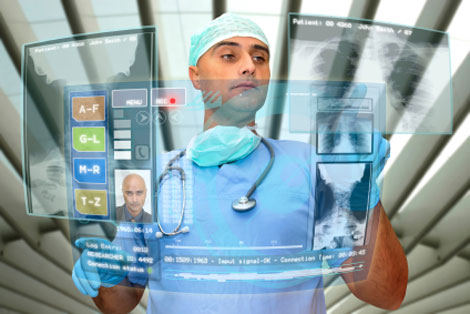
In the announcement, the agency stated it must assure that regulatory oversight doesn’t stifle innovation-but rather, encourages innovation while maintaining a commitment to safety and effectiveness. “We must turn what has long been considered the Valley of Death into the Pathway to Success, ” said device chief, Jeff Shuren, M.D.
But which new medical device trends and technologies are most likely to pose scientific and regulatory issues for the FDA in the next decade?
To answer that question we looked to the agency’s report, “Future Trends in Medical Device Technologies, ” released just last month. The report was written by William Herman and Gilbert Devey.
The agency’s Center for Devices and Radiological Health (CDRH) asked that question of its own technical managers and 15 non-FDA experts, including physicians, engineers, healthcare policymakers, manufacturers, futurists and technology analysts throughout 2007 and 2008.
The experts were asked to identify emerging medical device technologies and types of devices that manufacturers are highly likely to submit to CDRH for pre-market decision making between now and 2018.
Significant Trends, Devices and Products
The project, started in the spring of 2007, included an initial survey to identify a broad set of possible medical device trends, technologies and products that might have the potential for significant development over the next decade.
Each participant provided a list of independently identified product-specific predictions; a critical numerical rating of those specific product groups; and a set of detailed individual projections in areas of his/her own choosing during an individual interview.
Before we list the results, we’ll note there is good news here for orthopedic and spine surgeons developing new and novel minimally invasive procedures.
Six Technology Trends
The experts identified 6 major technology themes with 24 specific technologies identified as “highly likely to prefigure device innovation of the next decade.” Minimally invasive technologies scored the highest level of likelihood of having the most significant innovation.
Participants in the project, listed below, were asked to identify the most promising technology trends in their fields of expertise. They were then asked to rate, on a scale of one to five (with five being the highest) the likelihood of significant innovations in that area.
The technology trend winners, or the areas the experts were most optimistic about advances in innovation, were:
1. Minimally Invasive (4.41 out of 5.0)

The first area in this technology trend encompasses imaging devices and systems where developments may emerge in image-guided therapy, and in advanced ultrasound, MRI and optical imaging systems.
The second area in this trend, minimally invasive therapeutic products, includes minimally invasive implants (e.g., percutaneous or natural-orifice delivery) and minimally invasive radiotherapy systems.
The third area in this trend is photonics, including optical diagnostic devices and optical therapeutic devices.
Both molecular therapies (especially gene therapy) and nanotechnology were seen as important areas for innovation but, in general, as entailing a longer time horizon than the 10-year scope of this report.
Key technologies in this area (along with their rating scale) include:
- Photonic devices – 4.50
- Acoustic devices – 4.71
- Molecular therapies – 4.30
- Minimally invasive Tx technologies non-photonic, non-acoustic, non-“omic” – 4.32
- Miniaturized devices – 3.97
- Imaging devices/systems – 4.50
2. Electronics (4.23 out of 5.0)
 This area continues to be driven, in large measure, by the acceleration of silicon technology. In the agency’s evaluation scheme, electronics technologies comprise three main areas relevant to future medical devices: computerized devices and IT systems, robotic devices, and wireless systems.
For computerized devices and IT systems, confidence was high about advances related to integrated electronic patient medical record systems, computer-assisted diagnostic systems, Internet-based medical systems, virtual reality immersive medical training systems, and networks and systems of devices.
For robotic systems, highest confidence was associated with developments in robotic surgery, and robotic prosthetics. Significant military initiatives were noted in both areas.
For wireless, the most commonly identified product area for new developments was RFID (radio-frequency identification) technology.
The key technologies in this area scored as follow:
- Computerized devices, IT systems – 4.29
- Robotic devices – 4.04
- Wireless systems – 4.35
3. Detection, Diagnosis and Monitoring (4.21 out of 5.0)
The strongest confirmation of high likelihood of innovation was associated with sensor technologies including a wide range of new sensors; patient monitoring systems, especially remote monitoring systems; and genomic, proteomic, metabolomic, and epigenomic technologies—especially genetic diagnostic products.
Key technologies in this area scored as follow:
- Genomics, proteomics, metabolomics, epigenomics – 4.21
- Early detection and diagnosis (non-“omic” technologies) – 4.00
- Personalized medicine, “customizable” devices – 4.00
- Sensor technologies – 4.08
- Patient monitoring systems – 4.18
4. Decentralized Care (4.21 out of 5.0)
These products are home- and self-care products including new types of home sensors at the small end and smart homes at the larger scale.
For home telemedicine, interviews did not provide strong confirmation for the high 10-year likelihood scores primarily because of concerns about the real-life availability of healthcare professionals on the other end of the line.
Technologies include:
- Home/self care devices – 4.26
- Portable/mobile devices – 3.94
- Telemedicine systems – 4.56
5. Synthetic Organs, Tissues, and Combination Device/Biological and Device/Drug Technologies (4.16 out of 5.0)

This area includes stem cells, artificial organs and organ-assistive products. The experts expressed relatively strong confidence in advances for tissue-engineered products, neurosensory devices, glucose-monitoring products, electrostimulation-based devices, and prosthetic limbs with advanced bio-integration properties.
Participants indicated that new insulin delivery systems, new types of stents, and new joint replacements may also be developed in this time period covered by this forecast.
The experts mentioned major uncertainties about the source of cells for tissue engineered and other bio-based synthetic organs, biocompatibility of implants, complexity of bio-integration, and long-term durability.
Technologies include:
- Artificial organ, organ assistive devices – 4.09
- Combination products; Device + biological/pharmaceutical – 4.32
- Materials-based devices – 4.28
- Biocompatibility technologies – 4.19
- Infection-inhibiting devices – 4.17
6. Demographically Oriented (4.0 out of 5.0)
This technology trend includes mobility aids (including orthopedic implants). While the experts believed there would be some significant innovation, this area received the lowest ratings of the technology trends. For many products it was difficult for the experts to draw a clear line between likely uses by a particular demographic group as opposed to the larger general patient population.
Technologies include:
- Aging-related devices – 4.17
- Enhancement/augmentation products – 3.69
The report concludes, “It is clear that the landscape of these activities will be changing in substantive ways.” It notes that the emergence of more and more highly intelligent systems of interactive devices will necessitate very different evaluation and selection strategies. Similarly, the increasing prevalence of wirelessly communicating nodes (within and between product systems) will pose growing challenges of data reliability—hence, diagnosis and treatment with medical devices.”
Concern Over Tissue Engineering

Fullerene NanogearsBiologics appear to bear special concern to regulators as we note that the FDA’s regulatory pathway for device/drugs/biologics is, according to legal experts we consulted, unclear and unsettled.
States the report: “The practical feasibility of tissue-engineered devices, after the long period of unrealized expectation, will soon lead to serious concerns about the sources, availability, and quality of the required biological cells for these products. The increasing trend toward combination device-drug-biological products is sure to pose growing operational challenges to institutional systems that revolve around traditional product categorizations.”
The Promise of Minimally Invasive Methods and Diagnostics
“The increasing availability of minimally invasive methods and devices seems poised to reduce the personal burdens of lengthy recoveries for many types of illness and trauma, ” notes the report.
The likely incorporation of some form of computer-assisted diagnosis in many “smart” products, more advanced and sensitive diagnostic “omic” techniques, and the growing sophistication of electronic medical information systems appear to hold the potential for substantially better-informed diagnoses and treatments.
“Yet, ” continues the report, “These same developments will generate increased pressure for more effective bio-informatic systems and methods to handle the awesome data burdens they will bring. Developments in decentralized care—in homes, in ambulatory patients, and elsewhere—portend a far better optimized distribution of capabilities throughout the health care system.
Candidates for Priority Review
The FDA Innovation Initiative announced last week by Director Shuren calls for accelerating the development and regulatory evaluation of innovative devices that have the potential to transform an area of health care and address an unmet medical need.
The Initiative will place certain devices into a priority review program for eligible, new medical devices that demonstrate the potential to revolutionize disease treatment, diagnosis, or health care delivery and that target unmet medical needs.
Shuren didn’t name the devices, but hopefully, we’ve provided you a roadmap.
To read the entire report, click here.
Note:
The following individuals were non-FDA experts for the project.
- Susan Alpert, M.D., Ph.D., AdvaMed
- Elise Berliner, Ph.D., Agency for Healthcare Research and Quality
- Clement Bezold, Ph.D., Institute for Alternative Futures
- Joseph F. Coates, Joseph Coates Consulting Futurist, Inc.
- Molly J. Coye, M.D., Health Technology Center
- Kenneth Curley, M.D., U.S. Army Medical Research and Materiel Command
- Gilbert B. Devey, National Science Foundation
- Warren Grundfest, M.D., UCLA
- William Heetderks, M.D., Ph.D., National Institutes of Health
- Peter Katona, Ph.D., Whitaker Foundation, George Mason University
- Jack Lasersohn, National Venture Capital Association
- John Linehan, Ph.D., Stanford University
- John Parrish, M.D., CIMIT, Harvard University
- Diane Robertson, ECRI
- Peter Wells, F.R.S., Cardiff University, UK
Top product groups most likely to emerge or develop substantially over the next decade:
- Point-of-care products
- Computer-assisted diagnostic systems
- Neuro-sensory devices
- Optical diagnostic products
- Integrated electronic patient medical records
- Glucose monitoring products
- MEMS/MOTES devices
- Remote patient monitoring systems
- Robotic surgical systems
- Tissue-engineered products
- Advanced prosthetic limbs
- New sensors
- Electrostimulation products
- New types of stents
- Minimally invasive implants (e.g., percutaneous or natural orifice delivery)
- Image-guided therapy systems
- Advanced ultrasound imaging systems
- Internet-based medical device systems
- Optical therapeutic devices
- Joint replacements
- Advanced optical imaging systems
- Minimally invasive radiotherapy systems
- Virtual reality systems for immersive training and other applications
- Genetic diagnostic products
- New (non-eluting) drug delivery systems
- New types of insulin pumps and delivery systems
- Robotic prosthetics
- Networks and systems of devices
- New types of home sensors
- Smart homes
- Advanced MR imaging systems
- Advanced RFID systems
Source: FDA Report: Future Trends in Medical Device Technologies
Author
React:
Discussion
This is a fascinating development. In my practice we've seen similar outcomes with the revised protocol. The key differentiator seems to be patient selection criteria. Has anyone else noticed the correlation with BMI thresholds?
Great point. I'd push back slightly on the conclusion, the sample size in the cited study is too small to draw population-level inferences. That said, the directional signal is compelling and worth a larger RCT.
We implemented a similar approach last year. Early results are promising but we're still gathering 12-month follow-up data. Happy to share our protocol if anyone is interested.
Join the conversation
Orthopedic professionals are discussing this. Sign in and upgrade to read every comment and add your voice.