
“We are facing a real crisis that will likely result in patients I care about—patients who have numerous body parts breaking down at once—not being able to get the help they need.” — Dr. Thomas Fehring.
Dr. Thomas Fehring
7 min read Premium comments
Picture Of Success
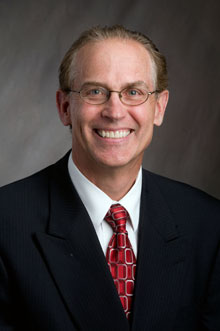
You might say that in North Carolina, Dr. Thomas Fehring, Co-Director of the Hip and Knee Center at OrthoCarolina, is the last orthopedist standing. As “the revision guy” in his part of the country, Dr. Fehring takes patients who have been told not to hope for much…and he makes them walk again. Dr. Fehring is also Vice President of the Knee Society, and has a particularly important long term goal—doing his best to ensure that older patients in the years to come have access to hip and knee replacement.
Many orthopedic surgeons share Dr. Fehring’s concerns and commitment to address the issue of accessibility to quality care in the United States. His concern for the elderly has its roots in Dr. Fehring’s early years. Born on an Air Force base in Virginia, a young Thomas Fehring lost his father early in life, but he was blessed to have a devoted grandmother to guide him (and perhaps toss in a bit of gentle ‘brainwashing’). “My grandmother said repeatedly, ‘You are going to become a doctor’ and I never set my sights on anything else. I played college football at Wake Forest, and by the time I graduated had undergone four open operations. Not only did I see medicine as an opportunity to get up every day and help someone, but as I began to learn about orthopedics, I found enjoyment in the biomechanics, and liked the fact that patients tend to get well (in contrast to other specialties). It was also helpful that my mom remarried a man who was an obstetrician—he was very encouraging of my goal to become a physician.”
Fumbles and interceptions in one arena would result in success in another. Dr. Fehring states, “When I arrived at Wake Forest the football team was still basking in its league championship. Things went south, however, and we only won a couple of games during my first year. I was disheartened, and I needed a place to succeed…I found that at the library. Who knows…if we had been really successful on the football field perhaps I would not have applied myself as much in the academic realm.”
“As one of the go-to surgeon for revisions in this area, I see very interesting cases, many of which involve infections. What is especially interesting to me is to take someone who hasn’t walked in a year—and who has been told by other surgeons not to hope for much—and make it possible for them to walk.”
The patient population that receives Dr. Fehring’s skilled, compassionate treatment every day is no mistake. “Yes, selecting joint replacement as a career probably has something to do with the fact that I was raised by my grandmother.”
In general, I am drawn to working with older patients. These patients are very appreciative, in part because they have multiple medical problems to deal with. They have body parts that are no longer cooperating—in contrast to a 25-year-old who feels invincible, gets fixed, and goes back to being invincible. We are all going to be old someday, and I get to see my future every day in the office.
In part, says Dr. Fehring, he can thank a few mentors for helping him learn how to be of service to his patients. “Dr. Neil Green at Vanderbilt used the Socratic method in order to force me to think deeply about clinical issues. Dr. Chit Ranawat made sure I understood the value of a balanced career, spending time in three areas—practice, teaching and research.”
Less concerned about the inflow of income, and more concerned about the outflow of orthopedists, Dr. Fehring is trying to bring attention to a looming crisis in hip and knee surgery. “I have recently published an article in the Journal of Arthroplasty regarding the nearly inevitable manpower issue that is staring us in the face. A great many orthopedists who do high volume joint replacement are going to retire in the not too distant future. Also, residents are not selecting hip and knee arthroplasty careers as often as they used to, most likely because these surgeries are not highly reimbursed in contrast to spine and sports medicine. These factors combined mean that by 2016 approximately half a million joint replacements will not be performed because the supply of surgeons will not meet demand.”
Dr. Fehring is also concerned about the effect the Internet has had on the practice of medicine. “‘Direct to consumer advertising’ has not necessarily been positive for the practice of medicine. Patients come to their physician asking for a certain technology or procedure that they have encountered during their ‘research’ on the Internet. They fail to realize that the information they have obtained is unfiltered—marketing procedures and/or technologies that have not been proven to be as effective as existing technology. We as orthopedists have a responsibility to our patients to be the arbitrators of such information, distinguishing for them real advances from merely ‘marketing hype.’”
Dr. Fehring is doing his part to innovate through his research on hip and knee implants. “I have been fortunate to help design a number of hip and knee products with some talented engineers. What is most important is to critically look at how the implants we are using today are performing in order to improve results for future patients. My research interests have focused on how to treat hip and knee implants that have failed, that is, revision surgery. We recently presented our multicenter study on treating one of the most difficult types of acetabular problems—pelvic discontinuity with a custom triflange implant. Our data showed that this was successful in over 90% of cases.”
“I have also done research on infections, finding that these conditions need to be treated aggressively to obtain the best results (usually with implant removal). In most cases, irrigation and debridement is not successful.”
I am working with a consortium around the country to learn more about periprosthetic infections. We have five high volume centers and have thus far published three papers on infection-related topics. To date we have found that if irrigation and debridement fails and the situation goes on to involve a two-stage reimplantation, then the failure rate is three times higher than if you do a two-stage implantation right away.
When Dr. Fehring sat down last year to make his list of annual goals, there was one that captured his attention and imagination more than any other. “I felt a strong urge to ‘give back, ’ and moved forward with plans to start the OrthoCarolina Charitable Foundation. We have launched the program, and are focusing on orthopedic education, both in the U.S. and abroad. We have established multiple Allied Health scholarships for needy physical therapy, nursing, and surgical tech students, and are also sponsoring nurses to obtain their Orthopaedic certification. I am particularly excited about our international fellowship. We have just hosted our first international fellow, a surgeon from Tanzania. In April 2011 we have two orthopedic surgeons coming from Nicaragua, one of whom has excellent manual skills. I am proud that everyone in our group has made a significant donation of funds to make this program a reality. There are still challenges, of course. International fellows come here and train on ‘Cadillac’ equipment and then must return to their countries and adjust to whatever they have. Hopefully we are teaching them techniques they can apply at home.”
Just as he thinks about the long-term well being of the patients in his waiting room, Dr. Fehring takes pains to ensure that his efforts abroad are also as lasting as possible. “I always wanted to be involved in teaching rather than swooping into a country and doing a few procedures. Three years ago I began working with Health Volunteers Overseas, and have been to Nicaragua each year. I’ve also been pleased that when I have reached out to colleagues around the U.S. they have responded by joining me on trips. These experiences have only made me a better surgeon because I get to see how surgeons there are able to do so much with so little. The first case I did was billed as a routine total hip, but in fact the patient had a fused hip. I encountered bleeding, asked for suction and was handed a little towel. When I asked for suction again I was handed another towel. Fortunately, the patient ended up doing very well.”
When things are challenging, Dr. Fehring relies on a power outside of himself for guidance. “I am a faith-based person, and I don’t for a minute think I am in control of everything. Depending on the patient and the situation, I may even say to the person, ‘Let’s just pray about your situation.’”
And the personality traits that have made him a success? “Experience has taught me the value of persistence—I am a grinder and somewhat of a bulldog when it comes to setting and achieving goals. It has been a wonderful surprise to look back and see my journey from private practitioner who started in a seven man group and who then helped build one of the biggest joint replacement centers in the country. I tell kids my kids, ‘I made 950 on my SATs and have still managed to accomplish a few things.’”
Dr. Thomas Fehring…operating in the present and attempting to change the future.
React:
Discussion
This is a fascinating development. In my practice we've seen similar outcomes with the revised protocol. The key differentiator seems to be patient selection criteria. Has anyone else noticed the correlation with BMI thresholds?
Great point. I'd push back slightly on the conclusion, the sample size in the cited study is too small to draw population-level inferences. That said, the directional signal is compelling and worth a larger RCT.
We implemented a similar approach last year. Early results are promising but we're still gathering 12-month follow-up data. Happy to share our protocol if anyone is interested.
Join the conversation
Orthopedic professionals are discussing this. Sign in and upgrade to read every comment and add your voice.