
Type the word sports concussion in any search engine and literally two million hits come up for everything from new studies and programs to prevention methods and treatment concepts. The flood of information on this traumatic brain injury is a sign of the times and, yes, changes in sports medicine.
The Rise of the Concussion
6 min read Premium comments
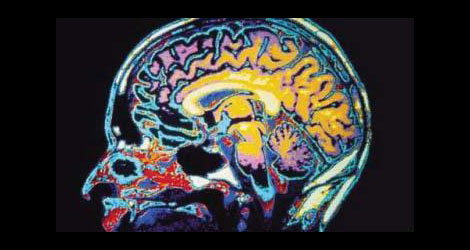
Sports-related concussion (SRC) is the new hot button issue in sports medicine. But it’s not just talk. Serious funding is flowing into the treatment of SRCs, with the most recent examples being the opening of the Chicago Sports Concussion Clinic at Rush University Medical Center.
But Why Now?
What has thrust concussions into the sports medicine spotlight? Many studies have looked at the incidence and characteristics of concussion in professional, college and high school athletes, however, as authors Powell and Barber-Foss wrote in their article “Traumatic brain injury in high school athletes (JAMA 1999:282(10):958-963), “solid concussion data do not yet exist for pre-high school populations and there is growing speculation that concussion in young athletes may produce more severe long-term development and cognitive problems than are seen in the adult athlete”.
Authors Lisa Bakhos, M.D., Gregory Lockhart, M.D., Richard Myers, BS and James Linakis, Ph.D, M.D., tackled this issue in their study in Pediatrics, the official journal of the American Academy of Pediatrics. In this study, the authors showed that children ages 8 to 19 years had an estimated 502, 000 ER visits for concussion between 2001 and 2005. The incidence rate of sport-related concussions rose over this same five-year period of time.
The authors pointed out that 8- to 13-year-olds accounted for 35% of ER visits and approximately half of those visits were for SRC. Approximately 25% of all SRC visits in the 8- to 13-year-old group occurred as a result of organized team sport (OTS). During the study period, 4 in 1, 000 children aged 8 to 13 years and 6 in 1, 000 children aged 14 to 19 years had an ER visit for SRC.
These are seriously high incidence rates. And they appear to be rising. From 1997 to 2007, although participation by children in organized sports declined; emergency department visits for concussions doubled. Even more concerning was that the rate of ER visits for SRC among the 14-to 19-year-old group had increased by more than 200%—according to the study authors.
The study by Bakhos et al. points out that the rise of concussion related sports injuries among children is NOT related to more players participating in sports. In fact, as noted above, the numbers of children participating in organized sports declined over the study period. As the authors stated at the end of their article, additional research is clearly required if for no other reason than to understand why concussion rates are rising. Are players paying more aggressively? Are players larger?
Clearly the level of awareness of the risks of head injuries is on the rise. In addition to children, female athletes also appear to be experiencing higher incidence rates for concussions, although the causes again are somewhat vague. Weaker neck muscles could play a part or some have even mentioned the more aggressive play by girls is a contributing factor.
The increased availability of incidence statistics combined with the rising number of ER visits aren’t the only reason sports-related head injuries are receiving so much attention. Recent studies have demonstrated that, for example, Lou Gehrig’s Amyotrophic Lateral Sclerosis was, in his specific case, due to repeated head injuries during this playing career. The Center for the Study of Traumatic Encephalopathy (CSTE), at Boston University School of Medicine is issuing a steady stream of studies which show that SRCs, far from being innocuous, invisible injuries, actually confer tremendous brain damage.
An entire sports mindset is being changed. Not that long ago a hard hit or a bang to the head wasn’t something that required a trip to the ER. It was in fact, an opportunity for a kid to prove his toughness by getting back on the field after a few minutes rest.
Younger Athletes, More at Stake
The CDC has developed the Heads Up: Concussion in Youth Sports initiative to help ensure the health and safety of young athletes by providing information about concussions to coaches, parents and athletes in youth sports. With the slogan, “It’s better to miss one game than the season, ” Heads Up supplies information in three key areas: preventing, recognizing, and responding to a concussion.
Concussions are doubly dangerous for younger athletes. Not only are they more apt to sustain an injury, but the results can be far more damaging, especially if left untreated. Serious risks of concussion include fatal Second Impact Syndrome, prolonged symptoms that last weeks or months (Post-Concussive Syndrome) and long-term diseases or disorders after the injury is sustained, such as depression, cognitive delay and Parkinson’s-like symptoms.
A Multi-Disciplinary Approach
The new Chicago Sports Concussion Clinic at Rush University Medical Center is employing a lot of the knowledge and best practices that doctors have accumulated over several years in the hope of offering a more comprehensive concussion care service. The Clinic is housed in the Rush orthopedics building and, according to a university press release features one of the largest multi-disciplinary teams in the Midwest to assess and manage concussions in athletes.

Rush Orthopedics Building/Rush Photo Group
“Our clinic is based on the idea that having a multidisciplinary, comprehensive approach to concussions is paramount in importance, ” says Dr. Jeffrey Mjaanes, director of the Chicago Sports Concussion Clinic and assistant professor of pediatrics and orthopedic surgery. Mjaanes is a primary care sports medicine physician, fellowship-trained and board certified in pediatrics and is one of the team physicians for DePaul University and the U.S. Soccer national teams.
“We have assembled a team of primary care sports medicine specialists, neurologists, neurosurgeons, rehabilitation physicians, neuropsychologists and therapists all of whom have special training in concussion diagnosis and management.”
One of the main goals of the center is to offer assessments within 24 to 48 hours after injury. The Clinic will treat child, teen and adult athletes and provide evaluation and treatment as well as medical clearance for those athletes who wish to return to organized sport activity. Patients are evaluated using multi-disciplinary methods which combine traditional patient feedback with a series of more high-tech techniques.
“The diagnosis of concussion is fairly standard since it relies on the athlete’s reporting of symptoms, ” explains Mjaanes . “Our symptom list is based on guidelines outlined by international concussion specialists at the Zurich Conference in 2008, now followed by most collegiate and professional sports organizations. At the Chicago Sports Concussion Clinic at Rush, however, we use tools such as computer-based neurocognitive testing, balance testing, [and] formal neuropsychologic testing to analyze symptom severity.”

Dr. Jeffrey Mjaanes evaluating a patient at the Chicago Sports Concussion Clinic at Rush/Rush Photo Group
A New Day for Concussion Care
Today’s “surge” in concussion awareness and diagnosis has been quietly building for close to a decade. A 2002 international conference brought concussion experts from around the world together in Vienna. Mjaanes says the experts in Vienna recommended the old grading system be thrown out because it was out-dated and too complex.
Two revisions later, with the latest guidelines coming from a 2008 conference in Zurich, doctors now have concrete, black and white guidelines. “The newest guidelines are based on several important tenets: athletes should be evaluated by a trained health professional, no symptomatic athlete should return to play and, once all symptoms have resolved, athletes should progress through a graduated program of increasing activity before returning to full, contact sports, ” explains Mjaanes.
He says most colleges, universities and professional sports organizations now subscribe to these newest guidelines. With the NFL coming out with its own set of concussion guidelines in 2009, it appears even the toughest (most concussion-heavy) sports are seeing the importance of concussion care.
A Movement Who’s Time Has Come
Rush Medical is part of a trend to increase the level of healthcare services for SRCs. “At Rush, we have been seeing athletes with concussions for years. However, although international guidelines for concussion management changed in 2002, we still found that many young athletes with head injuries were being misdiagnosed and mismanaged, ” says Mjaanes. “We decided we needed to have a more comprehensive approach to diagnosis and management of concussions to ensure that these young athletes were returning to sport safely. Last year we began laying the groundwork for this clinic and now are excited that we are getting it off the ground.”
Mjaanes says there is still a long way to go, with prevention being the ultimate goal. He says that so far, the technology in sports equipment like helmets and head gear hasn’t translated into decreasing the number of concussions, which means prevention of complication is the next best thing.
“At this time the most effective way to decrease the incidence of concussions is education. We need to inform players, parents and coaches about the significance of concussions and the importance of reporting symptoms. The best way, though, to prevent complications from concussions—such as fatal Second Impact Syndrome or Post-Concussive Syndrome—is by not allowing symptomatic athletes back in the game. Concussed athletes need to rest and not participate until all symptoms have resolved.”
React:
Discussion
This is a fascinating development. In my practice we've seen similar outcomes with the revised protocol. The key differentiator seems to be patient selection criteria. Has anyone else noticed the correlation with BMI thresholds?
Great point. I'd push back slightly on the conclusion, the sample size in the cited study is too small to draw population-level inferences. That said, the directional signal is compelling and worth a larger RCT.
We implemented a similar approach last year. Early results are promising but we're still gathering 12-month follow-up data. Happy to share our protocol if anyone is interested.
Join the conversation
Orthopedic professionals are discussing this. Sign in and upgrade to read every comment and add your voice.