
There are many stages at which a successful operation can be deemed unsuccessful—in the OR, during physical therapy, even later. Most times, however, the unsuccessful event doesn’t involve death. In the case of the longstanding problem of deep vein thrombosis (DVT), however, this may be the case. Now, say our experts, there are new, inventive options for dealing with this dangerous condition.
The Latest on Deep Vein Thrombosis
7 min read Premium comments
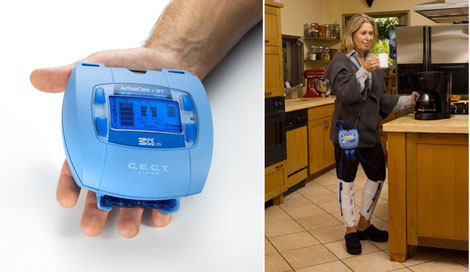
Even if you have performed joint replacement surgery—the most likely operation in which DVT could occur—thousands of times, you must still be vigilant with regard to this serious condition. Dr. Rick Strain, President of Orthopaedic Associates of South Broward and a DVT expert, states, “The rate of DVT—a blood clot that typically occurs in the thigh or calf—in joint replacement surgery is an amazing 40 to 50%. Before we started using prophylaxis we had many patients dying from DVT because of pulmonary embolism.”
So what brings on this ominous situation? “DVT typically occurs, ” says Dr. Strain, “when the blood flow rate of blood decreases, if the walls of the blood vessels are somehow damaged, or if there is coagulation. Things are only made more dangerous if the patient is obese, is a smoker, or has had DVT in the past. The classic situation in orthopedic trauma is where prolonged immobility leads to DVT and increases the chance of a pulmonary embolism. This, and because our surgeries are at such high risk for the condition, are why orthopedists—and the American Academy of Orthopaedic Surgeons (AAOS) in particular—have taken the lead in this arena.”
Unfortunately with DVT, there aren’t always obvious signs that alert the surgeon to the problem. Dr. Strain: “While patients may report pain in the area of the clot, very often DVT is asymptomatic. For this reason, the majority of our efforts have been focused on preventing the condition before it arises. To this end, orthopedists usually employ some combination of anticoagulant, compression socks, and early postoperative movement.”
Dr. Strain, who has worked on drug trials for DVT, notes, “Aspirin and Coumadin are frequently used as anticoagulants, and can help prevent DVT in the right patients. Both have side effects that are documented in the AAOS guidelines.”
At present there are several trials comparing new medications against Lovenox, the most widely used DVT prophylaxis. One of the most promising now underway is a blinded pharmacokinetics trial on an oral 10a inhibitor.
“The plus here is that with an oral 10a inhibitor you don’t have to do a blood test. Compare this to Coumadin, which is tried and true, but requires regular blood draws and monitoring; this means that you run the risk of the patient not being sufficiently anticoagulated and developing a clot. And Coumadin may have other issues. Fifteen years ago a form of Coumadin was used to make rat poison; it was considered so dangerous that they don’t even make rat poison out of it anymore.”
So how to predict who is at the highest risk of developing DVT? “Risk profiling is mandatory in most hospitals these days, and includes things such as the patient’s weight, mobility, previous history of DVT, cancer, and use of birth control pills. Low risk patients tend to be given compression stockings, as opposed to those at higher risk, who are most often treated with low molecular heparin.”
But, says Dr. Strain, the best is yet to come…and it has nothing to do with a drug. “When I was a resident at Massachusetts General I worked alongside Dr. William Harris, the originator of DVT research. At that time—it was the 1970’s—he used a sequential compression device that was showing promise. Now there is a new device that is similar, but much improved. In fact, in total hip replacement it seems to be as or more effective than any drug agents—with no side effects. This could be a real game changer for orthopedic surgery.”
The principal investigator on the aforementioned device trial is Dr. Clifford W. Colwell, Jr. of Scripps Clinic in San Diego, California. He states, “External devices that increase blood flow and decrease the risk of DVT are the future, avoiding the risks of anticoagulants. They have been, however, hard to develop to the point where patients can wear them continuously because their pumps tend to be bulky (you can’t use them out of bed or take them home from the hospital).”
Now, an Israeli company has developed a portable device, Active Care + SFT, that is so successful that physicians in our hospital no longer use anticoagulants…we only use this product.
The randomized, prospective research on this external pneumatic device, published in the Journal of Bone and Joint Surgery, was initiated by a pilot study at Scripps. Dr. Colwell: “We then enrolled 400 total hip arthroplasty patients in an expanded trial in nine centers in the U.S. The safety record has been outstanding and the device has been equal in efficacy (rate of DVT/PE) to the anticoagulants. We found that when compared to the low-molecular-weight heparin, commonly used in orthopedic surgery, this device resulted in significantly less major bleeding.”
And while it may not know where you live, this device is somewhat brainy. Dr. Colwell: “The device is Velcroed from the ankle to below the knee, and has a pump that can clip on to someone’s belt like a cell phone. The cardiac surgeon who designed the device created a chamber in the device itself that is sensitive to the blood flow in the veins. The blood gets to the heart by way of the veins and the heart’s pump takes it out to all parts of the body and then due to muscle contractions it is returned again to the heart. The device’s chamber reads the flow and coordinates the pumping action when the flow is the greatest—during inspiration at which time you increase the pressure in the right chest—and the expiration phase during which you decrease pressure in the right chest and thus increase flow in right heart. The chamber senses whether someone is in an inspiration or expiration phase and determines when the flow is highest and lowest; during inspiration it doesn’t pump…during expiration it pumps.”
“This product has been shown to be 10% more efficient than other devices that are currently available. Also remarkable is that is has an LCD monitor to record patient compliance. If the person doesn’t wear it, then it will not work; thus, it will be obvious to the doctor if the patient is not complying with treatment. If the person develops DVT then you can determine how many hours they used the device. This is obviously something that insurance companies are glad to see; anywhere from one-half to three quarters of American insurance companies are now paying for it. The bottom line is that we’re interfering with nature’s protectiveness. You have a big wound and then you throw an anticoagulant into the mix…mechanical devices are where we need to go.”
To help the orthopedic community get there, Dr. Colwell (who has no financial involvement in the project) is participating in a nationwide registry to help validate the Active Care + SFT. “Several centers across the country are using the device with up to 3, 000 patients to ensure that in the hands of ‘regular, treating’ orthopedists, i.e., those not involved in a trial, that it is as good as it was in the trial. We are creating a registry in order to establish exact rates of clinical DVT/PE up to three months post surgery using the device in the routine hospital setting.”
But Dr. Colwell knows that there is still a place for use of anticoagulants in the orthopedic population. “This device is only for the prevention of DVT/PE and not for established DVT/PE. Another example are patients with atrial fibulation—and there are many—who need to be on anticoagulants. The problems with the oral drug we have available now are the increased bleeding, the requirement of constant monitoring, the fact that many drugs and foods interfere with the anticoagulants, and the overall cost. The oral direct10a and thrombin inhibitor trials underway now are very exciting because they address two of these issues: they don’t require constant monitoring and should be less expensive. The bleeding risk is similar to the existing anticoagulants, however.”
With regard to the selection of a drug to prevent or treat DVT, Dr. Colwell gives a bit of history, “In 1985 there was an NIH [National Institutes of Health] conference on DVT that included a review of the related literature; the finding was that there was a gross underutilization of prophylaxis in orthopedic surgery. At that point NIH recommended that guidelines be developed so that patients would be at reduced risk of DVT. I participated in a number of drug and device trials that were part of establishing the best methodology to prevent this phenomenon in orthopedic populations. There have been guidelines developed by way of both The American College of Chest Physicians and The American Academy of Orthopaedic Surgeons that help the patient, the doctor and the hospital in utilizing the best practices now available.”
As we move forward with new trials and options, it is likely that the recommendations for the prevention and treatment of DVT will be altered to some extent. But alas, that is progress.
React:
Discussion
This is a fascinating development. In my practice we've seen similar outcomes with the revised protocol. The key differentiator seems to be patient selection criteria. Has anyone else noticed the correlation with BMI thresholds?
Great point. I'd push back slightly on the conclusion, the sample size in the cited study is too small to draw population-level inferences. That said, the directional signal is compelling and worth a larger RCT.
We implemented a similar approach last year. Early results are promising but we're still gathering 12-month follow-up data. Happy to share our protocol if anyone is interested.
Join the conversation
Orthopedic professionals are discussing this. Sign in and upgrade to read every comment and add your voice.