
For decades, musculoskeletal conditions have been elbowed out of medical school curricula by other areas of study, despite the well-documented prevalence of visits to doctors’ offices for musculoskeletal complaints. Years ago, Frank Wilson, M.D., Kenan Professor of Orthopedics at the University of North Carolina (UNC) School of Medicine and a former president of the American Board of Orthopaedic Surgery, decided to think and act locally, with an eye toward expanding the emphasis on musculoskeletal disorders in medical schools across the country. His work, “Development and Use of a Second-Year Musculoskeletal Organ-System Curriculum: A Forty-Year Experience, ” was co-authored with Robert Esther, M.D., and was recently published in The Journal of Bone and Joint Surgery.
Does UNC Offer the Best Musculoskeletal Curriculum?
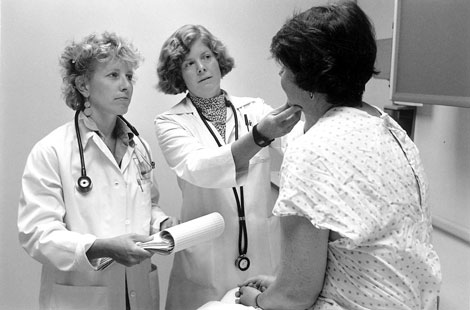
Dr. Wilson provides a bit of history, “Even back in the late 1960s there were studies showing that we weren’t doing a good job of preparing medical students to handle the musculoskeletal issues they might encounter. In 1970, the University of North Carolina School of Medicine redesigned the preclinical curriculum to implement an organ-system approach that included the musculoskeletal system. Taught primarily by the orthopedic faculty, the two-week course is given in the second year. It focuses on the basic science of the musculoskeletal system, which includes development, structure and function, normal physiology and biochemistry of bone, cartilage, synovium, and muscle, and pathologic changes produced in these tissues by injury or disease. It then proceeds to correlations between the pathologic, X-ray, laboratory, and clinical aspects in patients with musculoskeletal disorders.”
Often voted “best second-year course” by medical students, the program boasts six faculty members who have participated in the course for more than 20 years. So what nuggets of basic science wisdom are being imparted? Dr. Wilson: “We initially cover the normal development of the musculoskeletal system, and then detail the ways in which this development can go awry to produce congenital malformations. Then we review the gross anatomy of the limbs and back and discuss its connection to common clinical disorders. Following this, we cover the individual tissues of the musculoskeletal system with respect to microscopic structure, physiology, biochemistry, and pathology. Cartilage and the arthritides are also discussed, as is trauma. The course has changed very little each year, since the basics of musculoskeletal disorders don’t change a great deal.”
“We’re not trying to teach the latest in hip replacement…we’re teaching the anatomy, pathology, physiology, and biochemistry that underlie the problems that doctors encounter clinically.”
The UNC course consists of 40 contact hours equally divided between lectures and small-group sessions. “We make use of X-rays, photomicrographs, physical examination, and patient presentations in the daily small group sessions, which are the most valuable aspect of the program. The points made in the lectures are illustrated and amplified in interactive small group sessions. From the faculty perspective, small groups are very useful because we can more easily determine which students did not understand points made earlier in the day.”
Opening a window into his program, Dr. Wilson states, “For example, we might put up a normal X-ray, then put up an abnormal one and ask, ‘What do you see here?’”
We call on a student, who comes up, examines the X-ray, and discusses it. We are not trying to put them on the spot, but this teaching method has worked exceptionally well. If someone stumbles, then we help him or her along, saying, ‘Remember xyz this morning and apply that to this situation.’ If the student is still having trouble, we encourage them to use their peers for consultation.
“At this point we are more concerned with process and the correct approach than we are with the final answer. We try to minimize discomfort while maximizing learning. Indeed, the students regularly comment that they appreciate the nonthreatening environment that we try to create.”
There is nothing that drives home an academic point like the patient standing in front of you. “One of the areas that students are most interested in is arthritis. When studying this disease, we bring patients into the small group discussions and let the students hear from them about what it is like to have this condition. The students also see the patients’ X-rays to round out the learning.”

If the students weren’t learning, the teachers wouldn’t be putting so much effort into this unique program. “Three orthopedic faculty members meet four to six times a year to prepare the course schedule, review examination questions, and modify course content as needed. We first assess how students scored on the 100 question, end of course exam in the previous year. If we detect an area where it is obvious that our message didn’t come through as clearly as we’d have liked, we try to strengthen that portion in next year’s program. For the development of the exam, each lecturer—who may come from orthopedics, anatomy, biochemistry, and rheumatology—submits questions that are based on educational objectives. For example, the objective might be to learn the functions of the muscles in the forearm, and the question might be to predict the disability that would occur if one of those muscles were not functioning.”
Dr. Wilson: “About 25 of the questions are new each year, but we don’t use any questions from the last three years, so students can’t study from last year’s test. A subset of the questions are practical, i.e., based on the student’s ability to put various aspects of anatomy, pathology and physiology together with clinical information and X-rays to reach a conclusion about what is going on. The students’ learning experience is greatly enhanced by the fact that throughout the course basic science lecturers are asked to demonstrate clinical relevance, and clinicians are asked to point out the basic science underlying the clinical disorders. Throughout the program we keep going back and forth between basic science and clinical medicine.”
While the basics of musculoskeletal medicine haven’t changed much, technology has. “The fact that all lectures are now presented with PowerPoint slides, which are posted on the UNC School of Medicine’s web site, really facilitates learning for the students. They also have access to the audio files from lectures. The audio and PowerPoint files are available to students for approximately one year from the date of the lecture, making it easier for them to review for the course exam as well as the U.S. Medical Licensing Exam-I (USMLE-1).”
Says Dr. Wilson,
And the UNC medical students do very well on this section of the USMLE-1. Not only do our students consistently rate the musculoskeletal course highly, but their test scores compare favorably with those of students from other schools.
For this and other reasons, you would think that the UNC program would be frequently replicated. “Not necessarily, ” states Dr. Wilson. “Nationwide, increasing clinical pressures have compromised the teaching and research activities of faculty. While many orthopedic chairs have requested copies of our syllabus—which we have gladly provided—the problem with replicating the program is manpower. When they hear that we put 150 man-hours per year into the program, the chairs are hesitant. Generally speaking, there is so much more clinical pressure these days…so many people appearing in emergency rooms with musculoskeletal problems that it is hard to find enough time to teach.”
And despite financial support from the UNC School of Medicine, says Dr. Wilson, “The remuneration provided by the school is not commensurate with the clinical revenues lost due to faculty time spent in preparing and administering the course. We are fortunate that the musculoskeletal course has become an integral part of the UNC orthopedic department’s activities—even the more clinically oriented faculty members contribute to the course each year.”
Dr. Wilson concludes, “Less than half of the 127 medical schools in the continental U.S. and Hawaii have a preclinical musculoskeletal course. Our hope is that over time such programs will grow in numbers and elevate the quality of musculoskeletal medicine available to all patients.”
Discussion
This is a fascinating development. In my practice we've seen similar outcomes with the revised protocol. The key differentiator seems to be patient selection criteria. Has anyone else noticed the correlation with BMI thresholds?
Great point. I'd push back slightly on the conclusion, the sample size in the cited study is too small to draw population-level inferences. That said, the directional signal is compelling and worth a larger RCT.
We implemented a similar approach last year. Early results are promising but we're still gathering 12-month follow-up data. Happy to share our protocol if anyone is interested.
Join the conversation
Orthopedic professionals are discussing this. Sign in and upgrade to read every comment and add your voice.