
“Tom, you have two choices in life. You can be a priest or a doctor—but you must serve mankind. There is no greater reward.”
Dr. Thomas Faciszewski
6 min read Premium comments
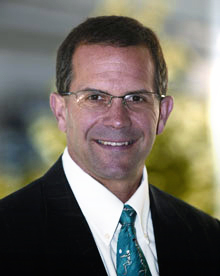
Picture Of Success
Tom Faciszewski was at a crossroads and the man offering advice was his grandfather. The words struck a chord in the 15 year-old…either pathway would have rewards that go beyond any paycheck.
Born in Columbus, Ohio, Tom Faciszewski’s parents moved the family abroad for three years. “My dad, a mechanical engineer, accepted a position in Germany; while there we traveled to over 21 countries, among them Tunisia, where I saw extremely difficult living conditions that were completely new to me.”
It was striking how the rest of the world was not necessarily focused on American values. This ‘flavored’ my view of the world at a young age, informed my practice of medicine, and years later would influence me as President of NASS.
“Those early experiences gave me the backdrop that whatever we as individuals are working on professionally ‘it’ must be more than just about us. Our work is bigger than we are, especially in healthcare…and it is easy to lose that focus.”
Dr. Tom Faciszewski, a spine surgeon with the Marshfield Clinic in Wisconsin is this week’s Picture of Success not because of any accolade from his peers or because he has served in the leadership of NASS and other societies, but because he exemplifies the dictum of service to patients and colleagues. No, he didn’t choose the frock (‘I didn’t think I was cut out for the priesthood’) but he did choose a comparably profound way to heal.
After completing Grinnell College in 1982, Tom Faciszewski began medical school at the University of Colorado. “I thrived on my rotations at the Denver General county hospital, and developed a love for the West. Given my affinity for this region, I decided to attend the University of Utah for residency. It was a challenging and rewarding experience, with call every other night—not to mention that we had a two week old baby at home. While it was like taking a drink from a fire hose, I also had the attitude of, ‘Wow, it’s too bad I’m missing the cases on those other nights.’”
It was not only the pace that was new, it was a certain mentor’s approach to the OR. “The most memorable person from my residency was Dr. Sherman Coleman, a founding member of the Pediatric Orthopaedic Society of North America (POSNA). He forever changed the way I think about how to perform in the operating room.”
Dr. Coleman’s philosophy was that a surgeon should have no wasted motion in the OR. Your movements should be fluid and your thoughts should be a running stream, as opposed to things being ‘stop and start.’
“This requires having mastered human anatomy and applying that knowledge in the art of surgery. I emphasize these points with all of my residents and fellows today.”
Beginning in residency, life—and sometimes death—are at your doorstep…and certain days will never let go of you. Dr. Faciszewski: “In residency you are introduced to this progression where you go from being the one who is taught to the one whose name is on a patient’s armband. You are introduced to the tragedy of human life—up close. I recall a 15 year old who had undergone surgery elsewhere and was not doing well. We took X-rays and found that he had an osteosarcoma that had gone unrecognized; he was dead three months later. That is burned in my memory.”
During his fellowship in spine surgery at the Minnesota Spine Center in 1992-93, Dr. Faciszewski would be influenced by some of the best surgeons in the world. He relates how their trust, dedication to education, and ultimate confidence in him helped shape his career. “In one of my first few days of fellowship working with Dr. Bob Winter, a deformity specialist, we had a patient from Russia with a 110 degree thoracic scoliosis. Dr. Winter left me in the OR and said, ‘Call me when you get the exposure completed.’ I must have turned pale because his nurse looked at me and said, ‘We’ll get through this.’ Another talented surgeon, Dr. Francis Denis, was very supportive, saying, ‘You’ll be better than any one of us attendings. You will take away the knowledge from each of us and combine it into the surgeon that any one of us could never be.”
Hoping he would be someone who could move the field forward, Dr. Faciszewski accepted a position at the Marshfield Clinic in Wisconsin. “I could see that the physicians here were all pulling in the same direction…in the direction of their patients. It’s hard to get physicians to agree on many things, and yet to see 350 physicians on the same page regarding the mission of their organization is rare indeed. I was also enamored of Marshfield because they allowed me time to become involved in efforts such as NASS and time to conduct research. Their dedication to endeavors other than, say, Relative Value Units (RVUs) is unique and one of the strengths of the Marshfield Clinic system.”
Dr. Faciszewski is also grateful to be in an environment where the big picture includes the whole patient.
While it is thrilling to encounter such a variety of spinal disorders, anatomical issues and pathology, it is fulfilling to be in a place where I can take the time to address patient fears and psychosocial issues. Increasingly, the push in medicine is to quickly ‘fix’ the patient’s problem, which sometimes leads to leaving other medical or psychosocial issues untreated.
“You take a normal person who gets injured and they are often bewildered by what is going on with them physically. They are in pain and often have a component of disability. We must devote time and energy to help them understand where they are in the injury and healing process and what they can expect. Fortunately, at Marshfield Clinic we have a full complement of folks on staff, including physical therapists, psychiatrists, psychologists, occupational medicine personnel, etc.”
By reflecting on his time at the helm of NASS, Dr. Faciszewski can peer into the future. “I was introduced to NASS because of the research that I had done while in fellowship regarding the coding of spinal procedures. In 1992, while I was in fellowship the RVRBS system of physician work RVUs was introduced. I had written several papers regarding the accuracy of database coding as it related to spinal surgery, complications and diagnosis. The problem then, as it is now, is that the databases are flawed regarding the accuracy of coding. The limitations in these administrative databases are all too commonly dismissed.”
And, says Dr. Faciszewski, the information gleaned from administrative databases may have untoward effects on patient care. “The government (Medicare) and others are using administrative databases to develop scorecards comparing hospitals to each other and Dr. X to Dr. Y. The outcome is that you have newspaper articles saying, ‘Hospital X has a higher mortality rate or other clinical outcome than hospital Y.’ However, this may not accurately reflect the situation, for example, if hospital X is caring for much sicker patients and/or more complicated patients (which isn’t reflected in the database coding). The incentive for doctors is to say, ‘Why would I take the sicker patients? They’re going to ruin my scorecard.’ This can unfortunately affect access to care.”
Regarding healthcare expenditures, Dr. Faciszewski is concerned. “Politicians and the government are telling the public that services will stay the same for our Medicare patients, but the fact is that no one can study the financial aspects of healthcare today and come up with the answer that nothing is going to change. Expenditures will likely increase if we can’t control costs for those over 65—or there will be rationed healthcare. Exciting new innovations reduce suffering for patients, improve function and generally increase the quality of life for patients. As our population ages, more and more patients will be asking for help from surgeons and physicians. We must work harder to find more economically viable solutions for common spinal disorders. “
We must help patients understand what the medical field is facing in terms of the rapidly rising age of the population and their increased medical needs.
“This is a challenge and an opportunity. As an example, the Marshfield Clinic has participated in pay for performance programs sponsored by Medicare to improve illness prevention treatment. These sorts of programs are clearly needed as we go forward into the future.”
Dr. Faciszewski has ample time to consider these and other issues in the field when he is pounding the pavement…for 26 miles or more. “My entire family participates in endurance events; I have been doing triathlons for 13 years, and have just set a goal of doing an ultramarathon (50 miles). My wife and I also enjoy big game hunting for elk, deer, and bear; we process the meat and make our own sausage. I also love working on cars, and restoring four wheel drive trucks.”
Dr. Thomas Faciszewski…living and teaching the true rewards of service to his fellow man.
React:
Discussion
This is a fascinating development. In my practice we've seen similar outcomes with the revised protocol. The key differentiator seems to be patient selection criteria. Has anyone else noticed the correlation with BMI thresholds?
Great point. I'd push back slightly on the conclusion, the sample size in the cited study is too small to draw population-level inferences. That said, the directional signal is compelling and worth a larger RCT.
We implemented a similar approach last year. Early results are promising but we're still gathering 12-month follow-up data. Happy to share our protocol if anyone is interested.
Join the conversation
Orthopedic professionals are discussing this. Sign in and upgrade to read every comment and add your voice.