
As it became clear from last week’s article, “Orthopedics on the Edge, ” the Armed Forces Institute of Regenerative Medicine (AFIRM) is a multi-layered organization chocked full of pioneering projects and fast-tracked research.
Revitalizing Regeneration Research
6 min read Premium comments
Time is ticking for the group.
The AFIRM project has a five-year life and it is two years into it. In many ways, the Institute has already fulfilled some of its biggest goals. Technology is heading for trials and market and there is now evidence that public and private institutions can collaborate and divergent research teams are in fact able to make things happen…quickly!
The AFIRM is composed of two consortia—the Rutgers/Cleveland Clinic Consortium and Wake Forest/Pittsburgh Consortium. Within these two branches lie individual projects and research teams from dozens of universities. The Rutgers Consort is led by Dr. Joachim Kohn, Ph.D. and includes a network of institutions from Rutgers, in collaboration with the New Jersey Center for Biomaterials (NJ CBM) in Piscataway, New Jersey, the Cleveland Clinic, the Mayo Clinic, Northwestern University to 12 other universities.
The New Jersey Center for Biomaterials

Joachim Kohn, PhDNJ CBM is a particularly interesting facet of AFIRM. Not a university like most of the other contributing research facilities, NJ CBM is actually a consortium in and of itself, comprised of top “Garden State” public universities that work in conjunction with industry to bring products to the patient’s bedside. Begun in 1997, the Center works on many fronts, from the development of new materials for tissue engineering to new medical implants and devices.
“By fostering relationships within academia, industry, and government, the New Jersey Center for Biomaterials harnesses its scientific, technical, commercial and educational resources to take innovative ideas from the proposal phase, through research and development, publication or patent, technology transfer, and ultimately to the prototype engineering and clinical trial stage in a relatively compressed period of time, ” explains Dr. Kohn.
“Its structured research, educational, and outreach programs, as well as its industrial partnerships provide researchers, students, postdocs, faculty, clinicians, and entrepreneurs—the necessary elements to develop important research skills, to advance and disseminate their technologies, to seed new projects and to make career connections.”
Kohn says the Center delivers two key qualities to the AFIRM roster. “The Center brings together the best set of multi-disciplinary researchers with private industry to work toward the military’s therapeutic targets for serving the unmet needs of wounded warriors. This net-centric effort is unprecedented in merging the resources of academia, private industry and the military in specific combinations to serve each project’s goals.”
Full and Complete Funding
The second quality is full and complete funding. Yes you heard correctly, full and complete. The NJ CBM is like a researcher’s proverbial candy store. “The entire development process of these materials, from the earliest benchtop research to translation into bedside use through clinical trials, is supported. Most centers receive funding for only one stage of the process, but the NJ CBM has received funding for each stage of the process.”
“This allows materials in development to progress from one stage to the next seamlessly, without waiting to identify new partners or new sources of support at each step.” This has led to some big developments, including the birth of four start-up companies, with around 50 patents being licensed to several companies. “Currently about 10, 000 patients carry products invented in the NJ CBM in their body.”
A Leader on a Mission
Professor Kohn is himself a major figure in the world of biomaterials. As the Board of Governors Professor of Chemistry and Chemical Biology at Rutgers University he has been the Director at the NJ CBM since its inception 13 years ago. A Fellow of both the American Institute for Medical and Biological Engineering (AIMBE) and the International Union of Societies for Biomaterials Science and Engineering (IUSBSE), Kohn wears many hats as a principal investigator for several major federally-funded R&D programs, including:
- The NIH-funded postdoctoral Tissue Engineering training program
- The National Resource for Polymeric Biomaterials, also NIH-funded
- The NSF-funded Partnership for Innovation, which is actually investigating plant-synthetic hybrid biomaterials
These roles are in addition to his involvement with the military as principal for the Department of Defense’s (DoD) Center for Military Biomaterials Research (CeMBR) and of course his leadership role at AFIRM.
Even though he is not a physician and didn’t attend medical school, Kohn’s work has focused on biomaterials for many years. He actually pioneered significant work in the field, and is perhaps best known for his contributions working with “pseudo-poly (amino acids), ” materials that are both benign and non-toxic but feature the benefits of plastics. This includes poly (DTE carbonate), a tyrosine-derived polycarbonate, which is currently awaiting clinical use in medical implants, with a Materials Master file in to the FDA.
Kohn has enjoyed funding that would make most researchers jealous, netting over $25 million since 1993 from government agencies. As if that wasn’t enough, Kohn has also founded two companies and serves on the scientific advisory boards of three—so far.

Hanshella Magno, graduate student in the Kohn Laboratory, working with prototype scaffod for bone regeneration in the craniomaxillofacial complex.
Yeah, he’s got awards too: New Jersey High-Tech Hall of Fame inductee and two-time Thomas Alva Edison Patent Award for best patent in New Jersey in medical research among many others.
But Kohn’s early background makes him all the more the perfect candidate for leading an organization to aid wounded soldiers. Born in Germany and holding dual citizenship, Kohn grew up amidst the aftermath of World War II, the only Jewish student in his high school class of several thousand. His father had lost both parents and a startling seven siblings in the Holocaust. But Kohn’s story is one of triumph. Becoming the first in his family to go to college, his initial foray into military medical research was with the Israeli army nearly three decades ago.
Looking to the Future
There are several exciting research projects just getting underway in the Rutgers/Cleveland Consortium. A clinical trial to assess the safety of a novel biomaterial for nerve regeneration is set to begin recruiting patients at the Mayo Clinic in association with industrial partner, BonWrx of Phoenix, Arizona, .in 2011.
2010 marks the beginning for two bone regeneration projects with a goal of FDA market clearance.
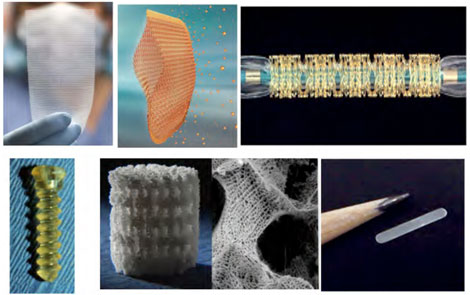
The first involves a team from Rutgers developing a tyrosine polycarbonate bone pin for small fracture fixation in conjunction with Trident Biomedical of Bridgewater, New Jersey.
Vanderbilt University working with Osteotech of Eatontown, New Jersey, hosts the second project, which looks to establish a GMP (Good Manufacturing Procedure) manufacturing facility for a new bone void filler.
Finally the Cleveland Clinic is partnering with Kalamazoo, Michigan-based Tolera Therapeutics to achieve DoD approval for a therapeutic antibody, TOL101 that enhances the body’s tolerance of Composite Tissue Allograft Transplantation. This therapy would take away the need for life-long immune-suppression. Enrollment may begin in early 2011.
Secrets of Rapid Research
Kohn points out there are several key reasons why AFIRM has been successful in pushing progress through. Here is his formula for swift research success:
Identify and run with the most promising projects. “The Rutgers/Cleveland Clinic Consortium of AFIRM has moved four projects towards clinical trials (some trials are already recruiting patients, and others are funded but are waiting for final regulatory approval, and some are currently waiting for final funding approval).”
Scientific rigor. “The natural opportunities for collaboration that arise as a result of the consortium structure are invaluable. Bringing the best scientists and clinicians in their fields together for cooperation rather than competition has been a tremendous boon to the innovative process.”
Consistent progress. “In some ways, after two years the timelines seem less ambitious than they seemed originally. In part, this is because we are meeting our milestones and moving our products through the stages necessary to reach wounded warriors.”
Realistic selection process. “We make every effort to only move those projects forward that are likely to reach clinical trials within the five-year funding period. This allows us to add funding to the projects that are closer to clinical trials. Our focus is always on getting new and improved therapies into the hands of military physicians and surgeons as quickly as possible. One source of support for projects at early stages of development is our program Center for Military Biomaterials Research (CeMBR), which is also funded by the DoD.”
When asked what he is most proud of Kohn of course points to the ability of the group to bring viable treatment options to soldiers. “We are most proud of the number of programs moving rapidly forward to help wounded warriors. The original goal of the AFIRM was to have one product in clinical trials by the end of the five-year funding period. Our Rutgers/Cleveland Clinic Consortium may have as many as five products in trials by then.”
React:
Discussion
This is a fascinating development. In my practice we've seen similar outcomes with the revised protocol. The key differentiator seems to be patient selection criteria. Has anyone else noticed the correlation with BMI thresholds?
Great point. I'd push back slightly on the conclusion, the sample size in the cited study is too small to draw population-level inferences. That said, the directional signal is compelling and worth a larger RCT.
We implemented a similar approach last year. Early results are promising but we're still gathering 12-month follow-up data. Happy to share our protocol if anyone is interested.
Join the conversation
Orthopedic professionals are discussing this. Sign in and upgrade to read every comment and add your voice.