
Women make up more than 50% of the population, comprise half of all students in medical school and are 30% of the gowned and masked individuals practicing general surgery. However, if you are looking for women in orthopedics you have to search hard to find them. Until a few years ago, barely 3% of female surgeons went into orthopedics. While that number is now a bit south of 10%, orthopedics still has the lowest number of women of any sub-specialty.
Where Have All the Women Gone?
4 min read Premium comments
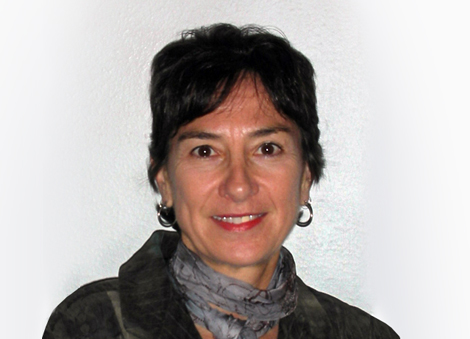

What is going on here? That is something that orthopedic surgeon and President of the Ruth Jackson Orthopedic Association (RJOA), Dr. Laura Gehrig, would like to know. “Historically, there were very few women in any kind of surgeon specialty, ” she said. “As time passed women gained ground in medicine in general, but they just have not broken into ortho.” The Association is trying to figure out why. Are women being discouraged—told that they do not have the necessary upper-body strength, or lack aptitude because they may not have played with tools or built models as children?
Gehrig calls such reasons myths saying that she knows many women who are accomplished total joint surgeons.
Part of the problem is they fear they cannot have a family and home life—that orthopedics is more demanding than other specialties.
While insisting that that, too, is a myth, she admits that orthopedic residencies can be a lot of work and noted that the most common injury presented to emergency rooms is a musculoskeletal injury for which an orthopedist is called.
Inspired by her work with polio patients, Ruth Jackson, the namesake of the organization, became the first practicing woman orthopedist in the U.S. She graduated from the University of Iowa in 1932 and opened her office in Dallas, Texas. When the American Academy of Orthopedic Surgeons (AAOS) was founded a year later it invited all orthopedists to join—except Dr. Jackson. Undaunted, she passed the Board Exam in 1937 and became the first woman to be certified by the American Board of Orthopedic Surgeons and, subsequently, the first woman admitted to the AAOS.
The Association that now bears Jackson’s name was founded in 1983 and is a separate society within the AAOS. It focuses on the body of health knowledge that affects woman, musculoskeletal issues for women, and encourages women in medical schools to apply for orthopedic residency programs. The founding women doctors, besides Jackson, were Liebe S. Diamond and Mary L. Morden, of Baltimore; Sandra Thompson of Boston; Jacqueline Perry of Downey, California and Mary Ann Shannon, Minneapolis. The association now has just under 600 members.
Gehrig points out that a doctor’s approach to an orthopedic woman patient should be different from that to a man. “Men have stronger bones than women, ” she notes. “If a 60-year-old man comes in with a hip fracture from a fall from no greater than a standing height, I look for something else going on. Is he a smoker? Does he have COPD? Is he on steroids? If a woman comes to me with a hip fracture from a standing height I think more of osteoporosis based on estrogen withdrawal.”
Gehrig also notes differences based on ethnicity. African-Americans and Native Americans have sturdier bones than do Whites and Asians. “If an African-American male comes in at the age of 60 with a broken hip, something else is really going on, ” she says.
Gehrig went to medical school at the age of 32, after marriage and with four children. She earned her undergraduate degree from the University of Saskatchewan in Saskatoon and her M.D. from Louisiana State University in Shreveport. She believes that her interest in orthopedics came about because of her father’s talents as a mechanic and her participation in sports.
“My father fixed everything around the house and I was with him while I was growing up. Then I played all kinds of sports—baseball, soccer, basketball, volleyball. I was third baseman on a baseball team for 14 years, until I was 22.” She also had an interest in basic science and was fascinated by metabolism, by the fact that bones can heal without leaving scars.
Her desire to “fix things” is reflected in what Gehrig most enjoys about orthopedics—dealing with trauma.
It is a matter of helping people get back to normal, of healing them. It is mostly the ordinary, hard-working people who are just doing their jobs when an accident happens who are most grateful for the help you can give them.
She recounted a recent accident in which a young man was brought into the emergency room with an open femur fracture and a severe knee injury from a truck having fallen on him. Gehrig cancelled her clinic for the day and took him immediately into surgery. When, eight and a half hours later, she emerged from the operating room to meet with the young man’s parents, they were so grateful for her work that the boy’s mother asked if she could hug her.
Gehrig’s other area of interest is osteoporosis and she works at prevention—getting her young patients to take calcium and vitamin D. She has found that a high percentage of girls between the ages of 8 and 13 are so deficient in those minerals that, if not corrected, they will begin to experience bone loss by the time they are in their 30’s.
Gehrig is aware that mentoring of individuals has been significant in helping women enter and become successful in the field of orthopedics. During her year as President of the Ruth Jackson Orthopedic Association she wants to collect and publish the stories of the mentors, men and women, who have helped develop this generation of surgeons. “I want to pay tribute to them, ” she says.
And lay the foundation for more women in orthopedics.
For more information about the Ruth Jackson Orthopedic Society go to www.rjos.org.
Author
React:
Discussion
This is a fascinating development. In my practice we've seen similar outcomes with the revised protocol. The key differentiator seems to be patient selection criteria. Has anyone else noticed the correlation with BMI thresholds?
Great point. I'd push back slightly on the conclusion, the sample size in the cited study is too small to draw population-level inferences. That said, the directional signal is compelling and worth a larger RCT.
We implemented a similar approach last year. Early results are promising but we're still gathering 12-month follow-up data. Happy to share our protocol if anyone is interested.
Join the conversation
Orthopedic professionals are discussing this. Sign in and upgrade to read every comment and add your voice.