
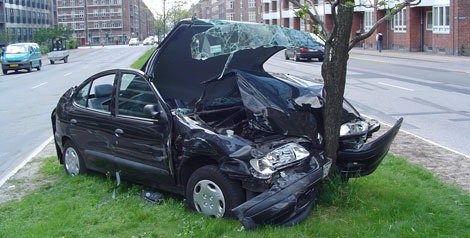
Lisa Ferrara credits her experience working as a forensic scientist investigating car crashes and child abuse victims with teaching her how to negotiate with the FDA.
Car Crashes Aid Grappling With the FDA
5 min read Premium comments
As she explained between sessions at the recent “Preservation of Motion in the Spine” conference at Hawks Cay, Florida,
The hardest part of forensic science was dealing with the attorneys and learning how to play the game. It was not about what you knew but about strategy, how you present it. That is why working with the FDA now works out so well for me. I had all that prep. If I can do it with attorneys I can do it with anyone.
Ferrara, who holds an undergraduate degree in electrical engineering, a masters in neuroscience and bioengineering and a Ph.D. in biomedical engineering, was looking to earn extra money while doing research at the Cleveland Clinic and took a job moon-lighting as a forensic engineer. She admits that, at the beginning, she hardly knew what she was doing but quickly found that her laboratory research testing bone and tissues and understanding how they failed or how they responded to various forms of stress was fundamental information that could be applied to anything.

Lisa Ferrara, Ph.D.Ferrara was soon the head of the musculoskeletal and brain injury division of the Robson Forensic Engineering Company. She participated in the development of a ski helmet, called the “Team Wendy Helmet, ” using a novel smart polymer. But plastic helmets have limitations—including wear from sun exposure and, often, incorrect strap adjustment by the skier. Her analysis of the effects of head trauma, which she used to help design “Team Wendy Helmet” led Lisa to be asked to serve as an expert bone trauma witness testifying at trials. Her forensic analysis would begin with such evidence as accident reconstruction reports that showed the movement of the vehicles, the damage, the forces involved, skid marks and other patterns, before moving on to medical records, photographs and physical evidence such as blood or blood patterns.
Her vehicular experience ranged from head injuries to deaths. One plaintiff complained, “I broke my finger on the air bag, ” while another, who must have had his arm raised at the time of impact, lost an arm from the air bag deployment.
Ferrara’s most memorable case, the one she is most proud of, was one in which a family had had its three children taken from it for two years because the mother was suspected of child abuse. One child was believed to be suffering from “shaken baby syndrome, ” a rotational type of brain injury because he had mild retinal hemorrhage.

Ferrara spent a great deal of time studying records and the literature on shaken brain injuries and discovered that impacts to the brain can also cause retinal hemorrhaging. Her investigation convinced her that the child had not been shaken but had fallen on carpeted steps, had rehabilitated successfully and exhibited no signs of child abuse. She was able to convince the jury of that fact with the result that the mother did not go to prison, as would have been the case if the defense had not prevailed, and the children were returned to their parents.
Currently, Ferrara will only participate on the defense side for medical device companies. One attorney called her about a client, a 27-year-old man suing over a fractured pedicle screw. When Ferrara questioned further she learned that the plaintiff weighed 450 pounds, was a smoker who had emphysema, and was also a diabetic—a high risk for a non-fusion. “They were trying to say that the screw broke due to a faulty design causing him extreme pain. However, his prior medical history put him at a much greater risk of a non-fusion that could result in screw or implant failure over time. The screw, if you read the label, is for temporary fixation until the bone heals. Of course it did not fuse based on his poor health at the time. The attorney later dropped the case against the medical device company”
Ferrara and her husband now own a consulting company and a testing company for medical devices based in Southport, North Carolina, called Orthokinetics Technologies LLC. She takes her client companies through all of their pre-clinical work and makes all of their submissions to the FDA for them.
She maintains that
what you have to prove to the FDA is different from what you have to prove clinically and they do not always overlap.
She explains. “Take cervical discs. I always ask my clients about whiplash in vehicular crashes and the possibility of implant migration. If the manufacturer is developing a cervical implant and the implant extrudes during a vehicular crash, they will have a law suit on their hands even if the device is not to blame! If someone with a cervical disc is in a low-speed rear-end collision and their implant migrates, they will blame the medical device company.”
Ferrara urges medical device companies to run whiplash studies with their implants in place and document as carefully as possible the migration patterns as a possible way to minimize potential liability. She wants her client companies to be prepared, to have tested their devices in advance for all kinds of eventualities. “What you do for the FDA may not answer all of the questions in the future, ” she says.
If someone gets injured, how are you going to protect yourself from lawsuits? Can you say, we did enough testing before hand to protect the company from liability—here is our test report ?
Ferrara finds dealing with the FDA “currently a struggle.” She believes some of the problem is political “which has nothing to do with science, ” and young FDA reviewers with little actual clinical experience. She also points out that much of the Department of Justice crackdown on orthopedic surgeon consulting contracts and recent articles in the national media may have led to mistrust between the agency and device manufacturers. Her opinion is that the FDA has become isolated in recent months.
“We need to open up that communication chain with the FDA, ” she said. “We need to work together, not as separate entities or as adversaries. These surgeons and engineers are brilliant people. The FDA needs to have more trust and work with them as a team. We need the FDA to say, ‘Look, we will talk with you guys. Let’s form a group and raise the questions together. What are your concerns? What evidence do you have to allay those concerns? Let’s address these questions, look at them from all angles.’ We need to act as a team with many different disciplines that can contribute to the evaluation of medical devices in a clinically relevant manner.”
Ferrera sees communication as a joint obligation. Surgeons and device companies have to make sure they are putting safe products into people. “It is our reputation too, ” she adds.
The result of the uncertainty with the FDA, in Ferrara’s opinion, is a stifling of innovation. “The FDA is requiring clinical studies with many 510(k) submissions—which are based on predicate devices. Those kinds of demands have slowed innovation. I do not want to see innovation disrupted. The result of all this is that innovation is going abroad, ” she said. “I have had five companies call me in the last month to say, ‘We are not going to develop in the United States.’ The American medical care system has been famous for innovation, for developing devices that are safe, and helping people live longer lives. “That is what we have been known for, ” Ferrara says. “To stifle that activity is frightening.”
For more information about Lisa Ferrara and her consulting firm, go to www.orthokintech.com.
Author
React:
Discussion
This is a fascinating development. In my practice we've seen similar outcomes with the revised protocol. The key differentiator seems to be patient selection criteria. Has anyone else noticed the correlation with BMI thresholds?
Great point. I'd push back slightly on the conclusion, the sample size in the cited study is too small to draw population-level inferences. That said, the directional signal is compelling and worth a larger RCT.
We implemented a similar approach last year. Early results are promising but we're still gathering 12-month follow-up data. Happy to share our protocol if anyone is interested.
Join the conversation
Orthopedic professionals are discussing this. Sign in and upgrade to read every comment and add your voice.