
The upcoming March 23 meeting of the FDA’s orthopedic panel to “discuss and make recommendations on issues relevant” to the agency’s reevaluation of its previous clearance of ReGen Biologics’ Menaflex, raises significant and troubling questions for the device industry.
FDA Abuse of Power?
6 min read Premium comments
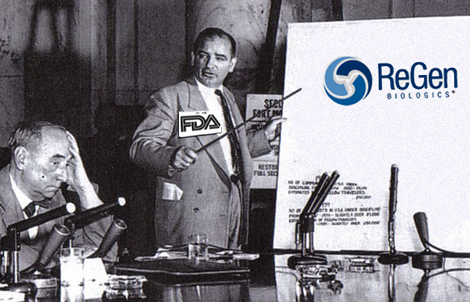
Does a “redo” of a previously cleared device in the absence of any adverse event reports constitutes a dangerous precedent for industry and violate one company’s equal protection under the law?
Warning to Industry
Twin Cities attorney Mark DuVal, a well known and respected legal expert who has guided many devices through the FDA’s Clearance and PMA processes, offers a sobering warning. DuVal, incidentally, has no financial or professional ties to ReGen Biologics.

Mark DuValDuVal told OTW, “This hearing borders on being vindictive and the whole matter is a very dangerous precedent for the industry and should not go without comment.” The FDA’s review of ReGen, says DuVal, is “unprecedented and unfortunate.”
“The Agency has no legal basis for rescinding this 510(k). But it may not make a difference because the FDA is doing indirectly what it cannot do directly. By holding this hearing it is making a statement of some sort to the medical community and medical device industry and it is using adverse publicity to do it.”
To those members of the broader medical community who may not understand these proceedings, said DuVal, it will scare them. Surgeons, hospitals and payers may well shy away from using a perfectly good product because the specter of an FDA review and the potential added risk of being second-guessed by product liability lawyers. Added DuVal, “Physicians have already been worried about using this product given all the adverse publicity and now FDA is piling on by holding this hearing—to what end?”
FDA’s Deafening Silence
OTW tried repeatedly to ask the FDA about its hearing and to specifically find out what the panel will be asked to review, consider and, frankly, do. What is the purpose of the meeting? The usually responsive agency public affairs officers declined to answer OTW’s repeated inquiries.
“At a time when the Agency is trying to become, or at least appear to be more consistent, predictable and rational, they convene this panel to reconsider a good decision once made after an exceedingly long and thorough deliberation. As a CEO or investor you now not only face the difficulty of trying to run FDA’s gauntlet to obtain approval or clearance, you now also face the prospect of FDA attempting to reconsider its decision.”
Device Background

ReGen’s MenaflexReGen’s device has been in use in Europe for seven years and has been implanted in more than 2, 500 patients. The FDA cleared the device after a tumultuous review process, which included soliciting the help of a congressional delegation and a meeting with the agency’s orthopedic panel at the end of 2009.
A multicenter, prospective clinical trial was started at the end of 1996 and became one of the largest controlled, randomized clinical studies ever organized and conducted to test a product used for arthroscopic knee repair.
The company submitted its first module of a PMA in 2004. Independent of ReGen’s submissions, other firms submitted comparable surgical meshes for FDA review and when the FDA cleared those device under 510(k), ReGen then decided to change its approach from PMA to 510(k). That submission occurred in December 2005 and the FDA granted 510(k) clearance on December 18, 2008.
Maybe the message, ” says DuVal “is that industry had better not enlist the support of its congressional delegations when it doesn’t like how things are going at FDA. But we should be not be dissuaded as an industry, nor as citizens, from calling upon our elected representatives to help us when an agency is dysfunctional and unaccountable.
“Even the FDA’s own lawyers have taken the agency to task for not following the law or its own rules. The internal report already conducted by the FDA on ReGen found no wrongdoing on the part of the company, nor did it find the ultimate decision was influenced by the company’s activities. In fact, FDA’s Office of Chief Counsel found, as the rest of the industry is already aware, the review staff did not follow the law in its consideration of this product under the 510(k) program. The review staff asked the company to establish the clinical benefit and utility of the product and asked for comparisons to the standard of care, none of which are legitimate criteria for clearance of a 510(k).”
ReGen Appeals to Commissioner
In a letter on March 12, 2010 to FDA Commissioner Margaret Hamburg, M.D., ReGen’s Chairman and CEO, Gary Bisbee, Ph.D., asks the Commissioner for relief from the agency’s “undermining ReGen’s ability to participate in the upcoming meeting.”

Gerald Bisbee, Jr., Ph.D.Bisbee writes that the panel questions prepared by the agency’s staff, “demonstrate that the conclusions on ReGen’s clearance have already been made and the panel simply represents an item on a list of items to be checked off.”
“On the whole, the questions are leading, suggesting negative implications regarding ReGen’s data, and unresponsive to ReGen’s clinical data in its 510(k) submission and clearance.”
As an example, Bisbee cites a question which asks the panel to identify whether differences between ReGen’s device and the individual predicate devices raise questions about safety and effectiveness and suggests that such questions are inherent to different anatomical sites.
“However, ” writes Bisbee, “the agency fails to explain that surgical meshes have been cleared for numerous anatomical sites because the question in determining substantial equivalence is not whether the differences between devices raise safety and effectiveness questions, but rather whether the differences between devices raise different types of safety and effectiveness questions.”
Other questions ask panel members to draw conclusions based on only part of the relevant information.
ReGen Denied Statutory Rights
Further, claims the company, the agency’s administrative procedures for this panel meeting deny ReGen its statutory right granting persons whose products are reviewed by panels the “same access to data and information submitted to a classification panel…as the Secretary…”
Bisbee writes that the agency refused to inform the company of the precise questions for the panel prior to the preparation of company’s written materials, although the agency’s written materials are structured to respond to the questions it drafted and provided to the panel. In fact, writes Bisbee, the agency provided ReGen the panel questions only after the company’s written materials were already complete and submitted to the agency.
Bisbee says the company received the questions, along with FDA’s 50-page panel executive summary, only 48 hours before both were shipped to the panel and the company only had the opportunity to comment on the agency’s errors in the summary and panel questions.
FDA’s Unfair Advantage
FDA’s “unfair advantage” of preparing its executive summary with knowledge of the questions for the panel’s consideration, while denying ReGen’s February 12 request for the panel questions in order to prepare their written panel submission, denies the company, according to Bisbee, the same access to data and information provided to the panel by FDA and therefore the same opportunity for the company to participate in the panel meeting.
Bisbee writes, “panel members received one set of written material that focuses on the core of the panel’s deliberations—the FDA’s—and another set that by comparison is an abstract effort to guess what the panel will be addressing.”
It is common procedure to provide panel questions to the sponsor 48 hours prior to sending them to a panel. Because this meeting to reevaluate a 510(k) cleared device is unprecedented and threatens a property right (a cleared 510(k)), Bisbee tells Hamburg that reasonableness would dictate modified approaches to agency’s non-binding guidance.
Bisbee asks that the questions provided by FDA’s staff to the panel be revised to remove any bias and leading language and conform to the regulatory standard for 510(k) review that has been applied to hundreds of cleared surgical meshes. “Furthermore, ” writes Bisbee, “we request that the company be provided the opportunity to submit appropriate written materials responsive to the questions provided to the panel prior to the panel meeting.”
Concluded DuVal:
I know people intimately aware of this product who say it is a great product, albeit much maligned in a post-Dan Schultz Agency. Legally, it will be interesting to see what FDA intends to do with this hearing. Will ReGen be given an opportunity to defend itself and be afforded due process?
Industry has many questions and FDA is providing few answers or direction, but it is keeping industry off-balance and on edge. What can we expect next from this new FDA administration?
This whole matter is a very dangerous precedent for the industry and it should not be conducted without comment.
Author
React:
Discussion
This is a fascinating development. In my practice we've seen similar outcomes with the revised protocol. The key differentiator seems to be patient selection criteria. Has anyone else noticed the correlation with BMI thresholds?
Great point. I'd push back slightly on the conclusion, the sample size in the cited study is too small to draw population-level inferences. That said, the directional signal is compelling and worth a larger RCT.
We implemented a similar approach last year. Early results are promising but we're still gathering 12-month follow-up data. Happy to share our protocol if anyone is interested.
Join the conversation
Orthopedic professionals are discussing this. Sign in and upgrade to read every comment and add your voice.