
Jeffrey Shuren, M.D., J.D., has been named the permanent head of the device division at the Food and Drug Administration.
Shuren New Device Chief at FDA
2 min read Premium comments
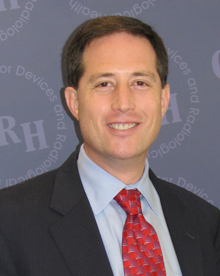
FDA spokesperson Mary Long told OTW that Shuren’s appointment was announced by FDA Commissioner Margaret Hamburg, M.D., at a CDRH (Center for Devices and Radiological Health) all-staff meeting on January 20.
Shuren had been the acting head of the CDRH since Daniel Schultz, M.D., resigned “by mutual agreement” with Commissioner Hamburg last August.
Since taking over the division, Shuren has led an initiative to review the agency’s 510(k) pre-marketing program and hired the Institute of Medicine to study possible changes to the program.
The 510(k) program had become a divisive issue within the agency, with some agency scientists complaining that top managers had put pressure on them to clear devices. It got ugly when Congress got involved and device companies got caught in the middle of the bureaucratic infighting.
Last September it was widely reported that Shuren was actively lobbying to become the permanent director of the CDRH. He announced six immediate priorities for the center, including reviewing the 510(k) pre-market notification program, learning how the FDA can adapt to changing technology while providing a predictable regulatory pathway, and establishing clear procedures for resolving differences of opinion within the center.
Payment and Regulatory Experience
Shuren brings an interesting mix of regulatory and payment coverage experience to the job.
Before taking over the devices division, Shuren was the FDA’s Associate Commissioner for Policy and Planning and directed the Agency’s Office of Policy and Office of Planning. Shuren received his medical doctorate degree from Northwestern University and his juris doctorate degree from the University of Michigan. He is board certified in neurology, and served as an Assistant Professor of Neurology at the University of Cincinnati.
In 1998, Shuren joined the FDA as a medical officer in the Office of Policy. In 2001, he became the Director of the Division of Items and Devices in the Coverage and Analysis Group at Centers for Medicare and Medicaid Services. He returned to the FDA as the Assistant Commissioner for Policy in 2003.
We hope to provide our readers an in-depth interview with the new director in the near future.
Author
React:
Discussion
This is a fascinating development. In my practice we've seen similar outcomes with the revised protocol. The key differentiator seems to be patient selection criteria. Has anyone else noticed the correlation with BMI thresholds?
Great point. I'd push back slightly on the conclusion, the sample size in the cited study is too small to draw population-level inferences. That said, the directional signal is compelling and worth a larger RCT.
We implemented a similar approach last year. Early results are promising but we're still gathering 12-month follow-up data. Happy to share our protocol if anyone is interested.
Join the conversation
Orthopedic professionals are discussing this. Sign in and upgrade to read every comment and add your voice.