
His orthopedic siren’s song began not with a broken bone, but with, well, sirens.
Dr. Darrel Brodke
9 min read Premium comments
Picture Of Success
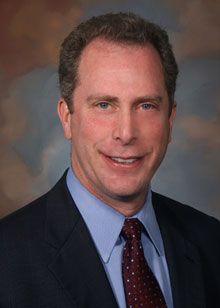
Dr. Darrel Brodke, Professor and Vice Chairman of the Department of Orthopaedics at the University of Utah School of Medicine, and Director of the Spine Service, explains, “I was raised in Oakland, California, and had a stimulating family life, with a father-dentist and a dental hygienist-mother. I considered medicine in high school, but I also had my sights set on being an astronaut—not only for the adventure, but because I had a substantial interest in achieving that level of education. When I got to college at the University of California, Davis, however, my perspective shifted radically when I began to work at an ambulance company. The drama involved in trauma situations was especially appealing and the more I did this work the more I liked it. I began to see that a surgical subspecialty was somewhere in my future.”
Medical Training
Dr. Brodke’s medical odyssey officially commenced at the University of California San Francisco in 1985. “When I began medical school I had a strong suspicion that I would choose orthopedics. In fact, as I traversed the subspecialties, I measured everything I did against orthopedics. I kept ‘coming back’ to this field because I liked the variety of patients, the complexity of the mechanical and biomechanical aspects of orthopedics, and I was drawn to the idea of getting someone back to near normal. In most other specialties you just help manage a patient’s disease, but in orthopedics you have a significant effect on his or her quality of life.”
Dr. Brodke then met a methodical, talented mentor who would help lay the foundations for his career. “For my residency we returned to Wisconsin, my wife’s neck of the woods. My primary mentor at the University of Wisconsin-Madison was Dr. Tom Zdeblick, who gave me an understanding that in addition to being rewarding, spine surgery and research could be fun. Dr. Zdeblick, now Chair of the department at Wisconsin, excelled at the four pillars of academic spine care: patient care, research, education and service work. He established a lab, held weekly lab meetings, set a research path that would cover the next several years, etc. Under his tutelage I discovered a particular interest in the cervical spine, finding this area appealing not only because of the interesting anatomy, but because cervical surgeries tend to be concise. Not to mention that the outcomes are usually good and readily apparent.”
But the best approach to the cervical spine can sometimes be quite unusual. Dr. Brodke: “One early spine case I had was a patient with rheumatoid arthritis in which we decompressed the spinal cord through the mouth—a transoral approach. It was very complex, and involved splitting the tongue and jaw. The patient did very well and I was able to be part of an interesting diagnosis, decision-making process, and surgery. Further solidifying my interest in cervical surgery was that in my third year I presented a paper at a meeting of the Cervical Spine Research Society. It was a really stimulating, fun group of people who enjoyed disagreeing and bantering with one another.”
Energized, Dr. Brodke went looking for trauma. “My residency gave me broad spine experience, but it did not include much trauma. For that I headed to a fellowship at the University of Washington/Harborview Medical Center and worked under the guidance of Drs. Jens Chapman and Paul Anderson. Dr. Anderson left to start a private practice as I began my fellowship in 1994. I applied for and got permission to spend a day a week with him as he built his private practice. It was interesting seeing things unfold in a brand new practice for Dr. Anderson. It was also fantastic working with Dr. Chapman; I was alongside him nearly every day for a year, caring for an amazing volume of spine trauma at Harborview and very complex spinal disorders at the university.”
Training Others in Academic Medicine
With this practical education under his belt, Dr. Brodke and family set out for Colorado Springs. “I joined a private practice and all was going quite well, including my relationships with my wonderful partners. Then I ran into a friend from the University of Utah who said, ‘We need a spine surgeon. Are you interested?’ I initially said no, but after some late night discussions with my wife, and a lot of soul searching, we reconsidered. It came down to this: I was two years out of fellowship and thought, ‘Well, if I am going to do academic medicine, this could be my last significant opportunity for quite some time.’”
“The department, ” continues Dr. Brodke, “had two spine surgeons, one who had experienced an aneurism and was unable to work. The other surgeon, who struggled with witnessing his friend’s painful situation, decided to leave for his home state in order to be close to family. I interviewed with 14 people over a few hours, and a couple of days later, I was offered the opportunity to run the spine section for the department. It was especially exciting because there were 18 people in the department, half of whom were my age. There was a great deal of camaraderie, and we all skied together and got our families together.”
An adventurer and spine specialist, Dr. Brodke would then add “diplomat” to his skillset. “For several years I was the lone spine surgeon in the department. In 1999 I hired a partner and we began to work closely with the neurosurgery spine surgeons. Five years later we developed a combined orthopedics/neurosurgery fellowship, largely because I believed that this approach to training was the wave of the future. As we thought, the benefits of fellows being taught spine surgery from two specialties outweigh the challenges of working across departments. There is naturally a significant amount of loyalty to one’s own department, such that when conflicts arise the tendency is to pull back to your own camp. This generates more conflict, however, rather than a resolution. We approach the fellowship with combined decision making, which works well.”
When in the lab, Dr. Brodke also tried to find and combine all the possible angles in a given test. “When I came to Utah I had concrete ideas about how I wanted to develop the spinal biomechanics lab and create certain machinery. Fortunately, our lab director, Kent Bachus, Ph.D., was very willing to do what it took to achieve these goals. Our pièce de résistance was a custom spine simulator that we’ve used over the last 12 years to test spines. While we originally worked from ideas already in existence, we took the process several steps farther to include software that gave us the ability to test and increase our efficiency.”
“This multiaxis simulator allows us to test specimens in a variety of ways. For example, we can load a specimen on the simulator and do pure moment testing (applying the load in one plane or in multiple planes individually or simultaneously). This means that you have very efficient, complex testing of a specimen in multiples directions—all with the aid of an optical tracking device.”
“This was all done on a shoestring budget, ” continues Dr. Brodke, “and created out of parts sitting around the lab. And it was just our Ph.D. student/software developer, the lab director, and me. We continue to alter the simulator, most recently upgrading the software to improve the stability of the machine as it is testing at higher rates.”
Digging for Data
On the research front, Dr. Brodke is curious about many things. One is how certain devices affect their neighbors. “I have studied motion preservation devices and the effects of surgery on adjacent levels in the spine. In one set of studies my colleagues and I looked at the effectiveness of cervical arthroplasty as compared with a fusion on the remainder of the cervical spine. We found that the remainder of the cervical spine was less affected by motion preservation at the operated level than if you fuse the segment. In another series of papers we looked at the effectiveness of two different styles of plating in the cervical spine, namely, a dynamic versus a static plate. We determined that a dynamic plate helps to share the load better than a static plate.”
“More recently, ” states Dr. Brodke, “I have brought in partners, Drs. Mike Daubs and Alpesh Patel, who are interested in clinical research. We have started single center trials and have also joined multicenter studies. One of the latter at present involves looking at cervical spondylotic myelopathy and outcomes of surgery. Thus far we have data from 300 patients around the country. Our results to date show that surgery helps these patients significantly as far as symptomatic relief and spinal cord and neurologic function. The bottom line is that this work helps us understand surgical decision making from a multicenter perspective, which carries quite a lot of weight.”
Whether single or multicenter, all in all it’s better to rely on data than on conjecture. Dr. Brodke: “We have won several awards for our single center study on the psychological health of 400 patients who have come through the spine clinic. My colleagues and I wanted to see how good we are at using our instincts when it comes to a patient’s mental status; we used the Distress Risk Assessment Method test (DRAM), which contains both a depression scale and a somatization scale. Spine surgeons who were 10 years post training, one year post training, and our nonoperative colleagues were all tested to see if they could determine which patients fell into which category: normal, distressed, or at risk.”
The DRAM has been shown to have validity in surgical outcomes, with worse outcomes among those patients who have higher DRAM scores. Our study found that none of us are particularly good at using our clinical instincts with regard to patients’ mental states. We think we know…but we don’t.
For this and other groundbreaking work, Dr. Brodke was given a special honor. Last year he was appointed the Louis and Janet Peery Presidential Endowed Chair in recognition of his academic and clinical productivity, teaching efforts, educational activities, and service. Dr. Brodke: “My responsibilities include overseeing all of the fellows in the department, made more challenging because we have seven fellowship programs in all the subspecialties. Because each fellowship was its own individual fiefdom, we brought them all under one umbrella to ensure that they were all being treated/managed the same way with regard to the amount of responsibility, compensation, etc.
“In the end, however we are still primarily a residency program. If we were to find that fellows were taking cases and attention away from the residents, that would be a problem. In our case, the fellows are encouraged, and are told, ‘You are part of the faculty and are here to teach as well as learn.’ Having a teaching role pushes them to be their very best.”
On the Horizon
Dr. Brodke is also glad that the field itself is being pushed to improve. “I find it particularly exciting that we are increasingly focused on trying to understand our success through clinical outcome measures. That process is evolving in interesting ways, for example the way that we measure outcomes is changing as we better understand patient expectations and needs. The problem is we thought we understood clinical outcomes; in reality we are just entering adolescence as far as understanding what really works for patients. What brought me into spine surgery was the fact that it was evolving quickly—I still feel like that 15 years later.”
And if that’s not enough change, there has been a huge shift on the home front. “We recently dropped our son off at college. While it is a big change for the family, it’s fun in that I get to relive my college years to a certain extent. He is studying to be either a neuroscientist or a physician. Our daughter is still in high school and much of the time can be found on the soccer field (with me in the bleachers). As for my wife, she truly grounds me and the family and keeps everything running smoothly—no small task.”
Dr. Darrel Brodke…taming trauma and opening new horizons.
React:
Discussion
This is a fascinating development. In my practice we've seen similar outcomes with the revised protocol. The key differentiator seems to be patient selection criteria. Has anyone else noticed the correlation with BMI thresholds?
Great point. I'd push back slightly on the conclusion, the sample size in the cited study is too small to draw population-level inferences. That said, the directional signal is compelling and worth a larger RCT.
We implemented a similar approach last year. Early results are promising but we're still gathering 12-month follow-up data. Happy to share our protocol if anyone is interested.
Join the conversation
Orthopedic professionals are discussing this. Sign in and upgrade to read every comment and add your voice.