
Eureka! You’ve just thought of a new way to improve that device you use in almost every surgery. Great. Now what?
New Device Idea? Seek Help
10 min read Premium comments
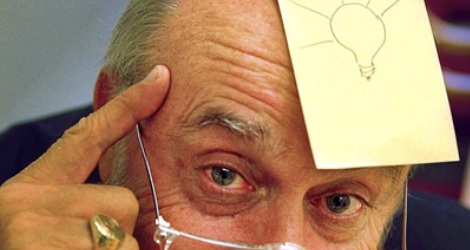
Full-time physicians are busy people. And when a physician does come up with an idea for the advancement of a medical tool or device, that idea often ends up buried at the bottom of a long “to-do” list. Yet the relationship between physician inventors and industry remains at the core of medical device development. Doctors bring new ideas to companies (and vice versa), and this interchange brings new approaches to surgery and improvements to old technologies.
So how does an idea become a fully realized product? The development path can be full of speed bumps and dead ends, and it helps to have a guide along the way.
Helping Ideas Become Reality
In an effort to move his own ideas into the market while also helping other physician inventors navigate the path of device development, Dr. Stephen Snyder co-founded a company called Redyns Medical, LLC with his son Nate Snyder and colleague George Rohlinger.

Nate Snyder/Redyns Medical LLCBack in 2005, Redyns Medical was nothing more than a school project. Nate Snyder explains, “I was in business school at the time studying health care entrepreneurship, and I needed a thesis to work on for an assigned project. Dr. Snyder had a patent sitting in the back of his desk that he had shopped around to a bunch of companies but couldn’t get any traction on it…So we took that patent and made a business plan around it.” That plan resulted in the successful development of a whole line of post-operative dressings called ProWick, and Nate Snyder’s school project became a budding new company.
If you consider Dr. Snyder’s first contributions to device development, however, the roots of Redyns Medical go back much farther. Dr. Snyder: “I had the fortune, good or bad, of coming into the field of shoulder arthroscopy 25 or 30 years ago when there really wasn’t any shoulder arthroscopy equipment or tools. There were very few people even dabbling in this technique. So I had the choice of either giving up and going back to the knee or helping develop equipment. The companies didn’t yet know what we needed, so I got into the product development business right from the very beginning.”
When it comes to getting a company’s attention, however, even three decades of experience in device development might not count for much. “In many of these companies, it’s almost like they have a revolving door. A new engineer comes in, he or she works for a few years, does a good job and then leaves. The next person to come in doesn’t recognize the history I’ve had with the company, so any new ideas I bring in go right to the bottom of the list. Despite this history, I’m still part of the masses scrapping for a spot on the development ladder.”

Stephen Snyder, M.D.
Redyns Medical LLC“We realized, ” says Nate Snyder, “that if Dr. Snyder is having difficulty getting ideas evaluated and given a fair shake in industry, other inventors who don’t yet have his experience must be struggling with many of the same issues. And we have found that to be true. Doctors are having a tough time getting to industry in this economy with just an idea. The engineering resources might be too slim or stretched, or the departments evaluating the technology don’t have enough clinical experience to see the forward looking benefit of a technology.”
Even if a company has all the resources in the world, physicians still might not have the means to move their ideas forward. “So often physicians will come up with an idea, and it might be left in their head or on a napkin, ” says George Rohlinger. “Then it gets stuck in the top drawer. When you have a day job and sometimes a night job, there isn’t a lot of capacity in your day to advance these ideas. So we feel that Redyns Medical is like a catalyst to help physicians take their ideas beyond the top drawer of their desks.” By helping physicians further develop their ideas and by helping companies understand why and how these ideas work, groups like Redyns can help physicians and industry see eye to eye.
A New Focus
When seeking guidance on a new device design, physicians and companies also need to consider how much the device development business has changed over the years. Newcomers to the field might find today’s market to be significantly different from the one their mentors remember.

George Rohlinger/Redyns Medical LLCIn Dr. Snyder’s field of shoulder arthroscopy, for example, the focus has shifted from macro to micro. Dr. Snyder: “Many, many of the products that are necessary to do these reconstruction surgeries are now on the market, and each company seems to have their variation of anchors, stitchers and even suture material, but improvement still remains. Nothing is ever static. But now it’s more difficult to get a company to see that this little change in the product or this improvement might be worthwhile.”
Despite the difficulties, making even the smallest positive change in a device is vital to advancing the field. “We had dozens of wonderful products that allowed us to move forward in arthroscopy, ” adds Dr. Snyder, “but it’s still a difficult surgery…Now the idea is to make it more available to general orthopedists who have a knowledge of arthroscopy and want to do a sophisticated surgery without having to open the shoulder. So it’s now into the refinement mode rather than the gross development mode like it had been.”
Working Under Strict Scrutiny
Certain government offices are also focusing on refinement, not necessarily of medical devices but of the physician/industry relationships which produce those devices.
New oversight from the Department of Justice on physicians and orthopedic device companies opened the door on all the skeletons in the closet. Company budgets have become the object of strict scrutiny, and now every dime spent needs to get value in return. For example, companies can no longer legitimize paying for dinners and hotel rooms for a physician consultant’s family during business trips. This of course seems honest and just in the midst of a recession where everyone is tightening their financial belts.
But all that scrutiny can be overwhelming.
Dr. Snyder fondly remembers a time when inventing new products seemed less complicated. “In the old days, we had freedom to get together at meetings or on weekends and brainstorm new ideas for product development. It was a nice opportunity to work together with industry as well as some other creative physicians whom we may not have had an opportunity to interact with previously.”
Unfortunately, in Dr. Snyder’s opinion, “those days are over.”
“The government oversight is going to make it really difficult to ever have the same type of relationship with industry that was present in the past for innovators, ” says Dr. Snyder. “Our project development meetings seldom occur and everyone is frightened of being implicated and/or indicted in a forbidden relationship. I’m hoping things will get better, but so far, I believe it has taken a toll on collective creativity.”
So the physician/industry relationship has changed for the better and for the worse, but with plenty of new applications for approvals and clearances knocking at the FDA’s door, there must still be a wealth of functioning physician/industry relationships. How do doctors and companies find ways to channel their creative ideas in today’s challenging and scrutinized development business?
Advice for Physicians
 “The best advice is to seek advice, ” says George Rohlinger. “I know that sounds simple, but the product development pathway is not a straight path. It’s riddled with choices and requirements. You can have a terrific idea or a new way of doing something, but can you engineer it? Can you manufacture it? Is it cost-effective? Is it an idea that’s already out there? Is there a customer for it? Finding someone with specific expertise in actually developing a product and getting it to the finish line is really important.”
If you have a contact in a major device company, however, speaking with him or her about your new idea might actually be counterproductive. “Many inventors come up with an idea and call industry the next day, ” says Nate Snyder. “Without proper legal protection, you can lose the exclusive rights to your idea, and as a result, lose the ability to capture the full financial potential of your idea.”
When you are ready to make the call, make sure you target the right companies and get the right person on the phone. “Getting the right access is important and really difficult, ” says Rohlinger. “Many of these companies are quite large now; they have hundreds and hundreds of products and hundreds and hundreds of employees. Understanding the nuances of all these companies is really important; every idea may not be right for every company. And if you wanted to call DePuy today, for example, who do you call? Gathering all of this information and networking takes a lot of time, but fortunately, we have the industry knowledge and know who to call.”
Groups like Redyns can also help physician inventors turn that one phone call into several calls. “There’s nothing better than competition to maximize the value of your idea, ” says Rohlinger. “If a surgeon calls company X and says ‘I’ve got an idea, ‘ now company X has that idea. Compare that to a scenario where the surgeon works with a firm like Redyns Medical, advances the product up the value chain, and rather than simply calling company X, calls companies X, Y and Z. Now we’ve got multiple parties involved and we’ve created a competitive market dynamic to gain a better appreciation for what industry thinks your idea is worth.”
Advice for Industry
Physician inventors aren’t the only ones who might seek guidance, and companies like Redyns can also give advice to industry. Nate Snyder advises companies to not limit their consultations to only the expert surgeons. “Industry primarily consults with the most skilled surgeons in the country. Dr. Snyder is one of them. There are things that Dr. Snyder can do that most surgeons can’t do. But industry really isn’t making products for the top 1%. They are trying to capture the broader market, who have a different skill level.”
“You have to have the best and the brightest as some of your industry consultants, ” he continues. “I think that’s really important, and that’s where a lot of the innovation goes. But oftentimes if someone comes up with something that makes a difficult procedure easier for the masses, the top surgeon consultants don’t get it. They think, ‘well this is easy already. Why do we need that?’ An example would be knotless suture anchors. If you’ve ever watched Dr. Snyder operate, tying knots is not a problem. But we’ve seen a huge proliferation of knotless suture anchors, and that’s geared towards the masses.”
Dr. Snyder couldn’t agree more. “We have to gear things towards the masses because those are the people that are out there trying to do the work. If we don’t do that, it will not only lead to patients having surgery that is not done well, but it will slow the growth of the entire specialty and limit it to people who have done fellowships or have had extra training.”
Dr. Snyder imagines a future where new devices help general surgeons complete complex operations. “If you need a specialized surgery done in Smalltown, USA, you won’t need to fly all the way to the big city because new technology will enable surgeons of all skill levels to perform the procedure. That’s what I’m excited about.”
What’s Next for the Device Development Business?
“The biologics are going to be a real big deal, ” says Dr. Snyder. And the physician/industry relationship will still be an important part of the development process. “Biologic development is going to be slow so we have to maximize what we can, ” he continues. “Without the means to apply these biologics and follow them clinically, they really don’t have any value.”
Dr. Snyder and his Redyns Medical team are working on their own ways to add value to a time tested biologic: allografts. “Allografts have been around for a while, but good allografts haven’t been around that long, ” says Dr. Snyder. “There is now just a small handful of companies led by one (Wright Medical) who are capable of supplying us in the shoulder business with a cryopreserved (not freeze-dried) biologic graft from human dermis or skin. We can use these grafts to completely replace and/or augment, whichever is necessary, a massive non-repairable or minimally repairable rotator cuff. We do it arthroscopically using all these tools that we’ve been working on for 30 years. This is kind of the zenith now of the whole rotator cuff repair business.”
“This allograft repair method is on-label for rotator cuff augmentation, but it still hasn’t been blessed by the FDA for complete rotator cuff replacement, ” continues Dr. Snyder. “So we’re developing the techniques, the technology, and the follow up to help the FDA see the bad and the good of it. So far the numbers are pretty phenomenal. Now we have people with a new rotator cuff who wouldn’t have had one before, and that’s the thing that I’m really excited about now.”
Just as government oversight scrutinized the physician/industry relationship, government policies will continue to alter the device development business. “Obamacare is going to make a big difference, ” says Dr. Snyder. “It’s expensive to use biologics, and somebody’s going to have to tell the world where the cash is going to come from, or if it’s going to come. So medicine might undergo a great big change, and it may just be a change that flows down the development of these new products.”
In the meantime, while congress works out health care legislation, physicians and industry will continue to work together to bring new ideas into fruition. Companies might not realize when a new product or an improved device is worth development, and physicians may not think they have the time or the knowledge to develop their own ideas, but with the help of an expert guide, new inventors and budding companies alike can navigate the bumpy road of medical device development.
React:
Discussion
This is a fascinating development. In my practice we've seen similar outcomes with the revised protocol. The key differentiator seems to be patient selection criteria. Has anyone else noticed the correlation with BMI thresholds?
Great point. I'd push back slightly on the conclusion, the sample size in the cited study is too small to draw population-level inferences. That said, the directional signal is compelling and worth a larger RCT.
We implemented a similar approach last year. Early results are promising but we're still gathering 12-month follow-up data. Happy to share our protocol if anyone is interested.
Join the conversation
Orthopedic professionals are discussing this. Sign in and upgrade to read every comment and add your voice.