
“He who desires to practice surgery must first go to war.”–Hippocrates
Retired Col. John Feagin, Jr., M.D.
10 min read Premium comments
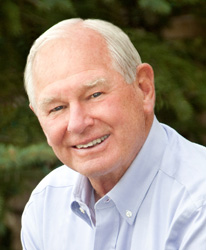
Picture Of Success
A veteran of Vietnam and the first active duty Army officer to attend medical school, Retired Col. John Feagin, Jr., M.D. of the Scientific Advisory Committee at the Steadman Hawkins Foundation in Vail, Colorado, knows the sobering arena of war and what it can teach those who take up the mantle of surgery.
Dr. Feagin: “During my 24 years in the military, I learned that one could be both a professional soldier and a physician…that these roles do not have to conflict. I use, appreciate and value the qualities and virtues that I learned from my service every day of my life.”
Many of these values were instilled early on…some while in the air. “I have always been accustomed to military life because my father flew in the Air Force. With high hopes that I would follow in his footsteps, my Dad took me flying in two classic war planes, a B-17 and a P-38. I was hooked! As for my Mom, coming from a fourth generation Texas family, she and my maternal grandmother kept me on the straight and narrow with regard to grades. While attending high school at the Texas Military Institute in San Antonio, I learned that one of my cousins had entered medical school. I admired him and kept this possible career path in the back of my mind. When it came time to select a college, my choices were either the U.S. Military Academy at West Point or Yale University. My Dad convinced me to aim for West Point, so I completed the application, penned the required essay and was accepted.”
Medical Training
But instead of the cockpit, it would be the open air for John Feagin.
It was my senior year at West Point, and I had kept my grades high enough to become a pilot. However, it turned out that my eyesight got an ‘F’—I had to change tracks. For two years I jumped out of planes as an artillery member of the 82nd Airborne Division. This was my life until I was accepted to the Duke University School of Medicine. It wasn’t easy though as I had to convince the Army into letting me attend medical school. Fortunately, with persistence, they realized the value of such a program and released three of us (leave without pay) so that we could attend medical school—with the understanding that we would return to the Army upon graduation. That was my first dogfight.
Describing how he made his way to Duke, Dr. Feagin notes, “During the time I was stationed in North Carolina, I had the good fortune to meet the Dean and founder of Duke’s medical school, Dr. Wilbur Davison. He had served in WWI, recognized the need for a professional military medical corps and was dedicated to bringing women and minorities into medicine. As soon as I entered the Duke program, I felt an incredible camaraderie within the orthopedics department. When shortly I ran out of money, the orthopedic department assisted me with grants and helped me obtain work at a local hospital. The loyalty I was shown cemented my attachment to orthopedics.”
Following an Army internship in Hawaii, Dr. Feagin headed for an orthopedic residency at Walter Reed Army Medical Center. Low tech was the order of the day…but not for long. “It was 1962, ” says Dr. Feagin, “a time when the plaster cast was the signature treatment; there was not much emphasis on surgical technique at the time. We could see the changes coming, however, and as arthroscopy, joint replacement and the Swiss AO technique came to the fore, we worked hard to master these new techniques.”
A Doctor in the Trenches
More concerned with saving lives than domino politics, in 1966 Dr. Feagin stepped up to his military obligations and headed for Vietnam. “I will never forget the day the Chief of orthopedics at Walter Reed was handing out assignments and asked three of us, ‘Where would you like to go?’ The first two guys had just returned from hardship tours so their choice was anyplace but Vietnam. Thus the white light came upon me…and so I said, ‘Vietnam.’ There was no other option. I had already been in Southeast Asia for a couple of months at the end of my internship (1962) and I felt that our national strategy was flawed so I focused on caring for casualties and learning what I could from the experience. War wounds are indeed a specialty and there are times in civilian life when you need that specialty…it’s an area that serves you well later in your profession.”
Dr. Feagin:
Upon my return to the U.S. in 1967 I was assigned to The U.S. Military Academy—West Point— as the team doctor for orthopedics, certainly the best assignment in the Army. During these five and a half years I was introduced to sports medicine and had the privilege of caring for teams and being surrounded by great coaches.
Thinking strategically, in the early ‘70s Dr. Feagin cast about for a way to broaden his credentials. “Hip replacement was just making its debut, with Sir John Charnley being the star of that show. Thanks to the Army’s vision I was sent to England and spent a year with Charnley studying hip replacement. One of the greatest orthopedic surgeons of all time, Sir John Charnley was a man of superior integrity who was committed to developing joint replacement that would give reliable relief to the suffering.”
Now superbly trained, Dr. Feagin easily could have been the object of Uncle Sam’s pointing finger in the “I Want You for the U.S. Army” poster. “The military gave me the responsibility of establishing a joint replacement fellowship program at Letterman Army Medical Center in San Francisco. We did most of the Army’s joint replacements for the next several years; the procedure was so new that the Army only had one or two sites where it could be done. Fortunately, Dr. Charnley had worked out most of the kinks so we focused on not cutting corners and achieving sterile techniques.”
“While at Letterman I also was committed to excellence in the residency program.” He chuckles, “Half of the residents had served in combat in Vietnam so they couldn’t be terrorized. Actually, their priorities were mature and appropriate. The cooperation with the civilian community was outstanding and our leadership was top notch, namely the renown Chief of Orthopaedics, Colonel Sterling Mutz. Dr. Mutz was a real leader of men and builder of character.”
Taking a break from presiding over the OR, in 1978 Dr. Feagin returned to West Point as Hospital Commander. “I thought it was a logical move to see what it would be like to do administration and command. Love, instead of logic, prevailed, however, and I found out that my leanings were more toward surgery.”
But during his two years as Hospital Commander, Dr. Feagin did leave his mark on history.
The doors of West Point were opened to women during my tenure, so their health and welfare was my responsibility. There was a commitment on the part of West Point to do its best for women…and the women did their best for the institution. From the outset they have shown an amazing aptitude for leadership. We did have to work with the fact that there are certain strength tasks that a 110lb woman can’t do, and 190 lb man can do—so we had to provide alternatives for the women. For example, boxing and wrestling were mandatory for the men so we substituted unarmed combat for the women. This seemed more socially acceptable at the time. I was pleased to find that, generally speaking, there was a cooperative spirit among the military staff with regard to preparing women for their new roles.
A Veteran and a Volunteer
Pulling a new life out of the (fresh) air, Dr. Feagin then took a chance on the American west. “I retired from the Army in 1979 and struck out for Jackson Hole, Wyoming. My children were entering high school, and I wanted them to experience something completely new. My experiences there were just wonderful, in part because we so enjoyed the ranching community. It is similar to the military in that there is a focus on self discipline and on the outdoors. After 10 years in Jackson I came to realize that I was getting older and that the requirements of a rural private practice were increasingly physically demanding. The opportunity to return to Duke arose, including the chance to participate in the residency training program and do research…I went back to Duke, and remained there until I retired from active orthopedics in 1999.”
And those interested in the forward movement of the field would benefit from his perspicacity. “One of my research interests has been knee and meniscal repair and replacement. In working on preservation of the meniscus, my team and I acquired substantial funding and set out to determine how the meniscus tore and how it could be repaired or replaced. We found certain techniques of suture to be most efficient and also developed a barbed staple to facilitate repair. We were committed to salvaging the torn meniscus and preserving the function of the knee.
“I also worked with the Johnson Family and Aircast to develop a cryo cuff for the knee and later the shoulder, a product that helps control swelling, edema, and pain. Aircast, subsequently purchased by Donjoy, continues to develop new products and for many years has funded our Sports Medicine Traveling Fellowship program, which sends 4 to 8 scholars a year to Europe, Asia, and South America.”
Committed to sharing his expertise, Dr. Feagin has long volunteered his time to improve the healthcare of those around the world. “I enjoyed volunteer work with the U.S. Ski Team and our Olympic Teams and was chosen as team doctor for the 1992 U.S. Ski Team at the Albertville Olympics. I also did mission work with Operation Blessing in Kazakhstan and Panama and with Samaritan’s Purse in Kenya. Kazakhstan was particularly interesting; while there I came to appreciate the Ilizarov technique as a low cost and effective way of handling difficult fractures.”
But his most enjoyable volunteer experiences emanated from his five trips to Cuba. Dr. Feagin: “Traveling to Cuba is legal under the U.S. Treasury Department regulations if you are invited as a physician, which we are. The Cuban medical system, a highly organized affair, is most receptive to our visits. This year Dr. William Stetson took 33 of our colleagues to three communities in Cuba and taught arthroscopic surgery. While I would love to see the Cuban orthopedists come here for a period of study, their country is not likely to give them visas at this time.”
Providing a bit of history, Dr. Feagin adds, “My work in Cuba stemmed from the idea of reestablishing the pre Castro relationship that existed between Duke University and the University of Havana. Though I was not able to accomplish this, I was able, with the help of an orthopedic colleague, Dr. William Stetson, to establish a meaningful working relationship between Dr. Cambras, the senior orthopedic academician in Cuba, his team, and approximately 50 of our orthopedic surgeons. This dynamic alliance involves an exchange of colleagues (when conditions allow), an emphasis on minimally invasive surgery, the establishment of arthroscopic teaching labs, and shared surgery. We now visit three sites in Cuba on an annual basis—Havana, Ciego de Avila and Santiago—and have established facilities for teaching arthroscopic surgery, shared the enthusiasm of their surgeons, donated significant equipment and fostered mutual understanding within orthopedics.”
Advice for the Future
As for orthopedics in the U.S., Dr. Feagin urges surgeons and researchers to keep up our strong track record:
I hope that we continue to attract the best and brightest. That has been our hallmark for fifty years and the science and accomplishments of orthopedics over the past five decades reflect the talent we have enlisted and enjoyed. My concern is that we may become so technologically competent and dependent that we ignore the human side of the equation…the caring, the physical examination, the followup, the commitment to community.
Having devoted a substantial amount of his life to military service, Dr. Feagin avers, “Those who have fought for freedom share a quality of life that the protected can never know. It may sound cliché, but freedom isn’t free. And our core values are weakened when we do not recognize and fulfill our responsibilities to our government, our Constitution and our Country. There are many opportunities for service that do not embody carrying or using a weapon. As physicians we are blessed to have so many opportunities so readily available and needed.”
But how do you convince budding orthopedists to serve in the military? Dr. Feagin advises, “I would emphasize recruitment in medical school, offering paid opportunities for short specific military medical service experiences. This would enable students to see firsthand, early in their career, the professional freedom that can be enjoyed and the educational opportunities the military provides. I personally felt more freedom to practice the art and science of my specialty in the military than I felt in either private practice or the university environment.”
Of the home front, Dr. Feagin states,
It is too easy to leave the family behind in our quest for professional excellence. This may come as a surprise to some, but meetings are not necessarily family vacations! The family deserves first priority from day one.
“Because of my sports medicine background, ” says Dr. Feagin, “I have participated in many activities, including jogging, skiing, flying and climbing, mostly with my family. They have also come with me at times to cover high school and college sports teams, as well as our national teams…great venues and great opportunities for meaningful relationships and travel.”
Dr. John Feagin…a veteran of excellence.
Author
React:
Discussion
This is a fascinating development. In my practice we've seen similar outcomes with the revised protocol. The key differentiator seems to be patient selection criteria. Has anyone else noticed the correlation with BMI thresholds?
Great point. I'd push back slightly on the conclusion, the sample size in the cited study is too small to draw population-level inferences. That said, the directional signal is compelling and worth a larger RCT.
We implemented a similar approach last year. Early results are promising but we're still gathering 12-month follow-up data. Happy to share our protocol if anyone is interested.
Join the conversation
Orthopedic professionals are discussing this. Sign in and upgrade to read every comment and add your voice.