
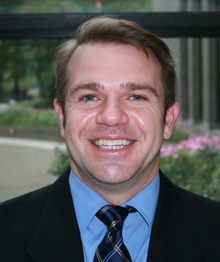
If you Google “orthopedic oncology, ” he is the first surgeon you will see. Dr. James Wittig, Chief of Orthopedic Oncology and Sarcoma Surgery and Associate Professor of Orthopedic Surgery at Mount Sinai Medical Center in New York City, is one of only approximately 150 orthopedists in the U.S. who choose to tackle the bone and soft tissue cancers that threaten life and limb.
Dr. James Wittig
7 min read Premium comments
Picture Of Success
The son of a police officer, Jim Wittig grew up (not roaming the streets of) Paterson, New Jersey.
My parents were strict and strongly emphasized academics. My mom, a homemaker and hairdresser, took great care of me, as well as of my brother and sister. The family story goes that even at the age of three I was dragging a black bag around saying that I was going to be a doctor. Other family members and family friends basically patted me on the head with a ‘Yes, dear’ attitude. I turned out to be the first physician in the family.
Hands-On Academic Training
Majoring in biology at Seton Hall University, Jim Wittig reveled in understanding how the body works. “I began medical school in 1990 at the New York University School of Medicine, selecting this institution because of the chance to have plenty of hands on experience at Bellevue Hospital. As one of the local public teaching hospitals, Bellevue afforded residents and medical students, under the direction of attendings, the opportunity to spend a lot of time in the OR and directly caring for patients at the bedside.”
During this time the talented Dr. Wittig entered the Alpha Omega Alpha Society and then became President of the local chapter. It didn’t take long to find his calling. “Working closely with orthopedic residents in medical school allowed me to have a bird’s eye view of the specialty. And I liked what I saw, namely that the patients came in with problems, you fixed them, and in most instances they were instantaneously better.”
He then came to see the emotional power in limb sparing surgery. “I did my residency training at Columbia Presbyterian Medical Center, where I worked with pioneers in the field of orthopedic oncology. One of these was Dr. Ralph Marcove, who initiated limb sparing surgery for sarcomas. Another was Dr. Harold Dick, an early pioneer who taught me sophisticated surgical techniques and how to diagnose and care for pediatric and adult patients with sarcomas. It was astounding to see how many patients they had who were years out after surgery and would come back and visit. With orthopedic oncology I could see the enormous impact that one could have on people’s lives. To preserve a leg or an arm, and to do so when patients are so afraid about their futures…words cannot express how powerful that is.”
After winning an award for excellence in orthopedic surgery at Columbia, Dr. Wittig moved on to a two year orthopedic oncology fellowship in Washington, D.C. “I was fortunate to have exposure to a number of sites during this year, including the Washington Cancer Institute, Washington Hospital Center, Children’s National Medical Center, National Cancer Institute and the Armed Forces Institute of Pathology. My primary mentor was Dr. Martin Malawer, who taught me nearly everything I know about the field. He and I developed a number of papers on removing tumors around the shoulder girdle, as well as reconstructing the shoulder girdle.”
Dr. Wittig adds, “I found the shoulder girdle to be particularly challenging, not only because it is surrounded by significant muscular tissue, but also because most tumors grow in close proximity to it and compress the brachial plexus and blood vessels. The tumor has to be separated from the brachial plexus and vascular structures, the scapula and upper humerus have to be reconstructed and then covered over with muscle rotation flaps. Such work requires skills in vascular surgery, neurosurgery and plastic surgery in addition to orthopedic skills that I was capable of perfecting during my fellowship.”
It was also during this time that he would be introduced to the government’s health superstructure: the National Institutes of Health (NIH). Dr. Wittig: “Part of my fellowship role was acting as a sarcoma consultant for the NIH. I worked alongside physicians at the NIH who developed special protocols for treating pediatric patients with bone and soft tissue sarcomas. We developed protocols for patients with sarcomas who were in desperate situations where no other treatments were available anywhere in the country. They could come to the NIH, however, and undergo experimental treatments.”
Leading the Field
Some doctors have to go looking for patients. Unfortunately, Dr. Wittig did not.
In 2001 I returned to New York, started a practice at NYU’s Hospital for Joint Diseases, and started an orthopedic oncology clinic for indigent patients at Bellevue Hospital. There was an enormous need as the oncology clinic quickly began treating 80-100 patients a year…and I was the only doctor there.
Appointed the Director of the Sarcoma Section at the NYU Cancer Institute in 2005, Dr. Wittig quickly established an environment of cooperation. “I brought all the doctors together who were interested in sarcomas and addressed each patient’s needs in a multidisciplinary fashion. We had a medical oncologist, pediatric oncologist, radiation oncologist, radiologists, musculoskeletal pathologists, and others. After a year in this position I was appointed Chief of Orthopedic Oncology at Mount Sinai Medical Center, a fantastic place with a warm environment and an efficient team. Mount Sinai was among the top 20-25 institutions in NIH funding this past year for basic science research. This means we are able to effectuate a lot of collaboration between clinical and basic science researchers.”
Those 149 or so other orthopedic oncologists in the country could very well be relying on Dr. Wittig for data in the future. “We are now developing a tumor bank and have 60 specimens at present. The tumors will be utilized for various molecular and translational scientific studies in order to develop new medications for sarcomas. Once the tumor bank reaches 100-120 specimens we will then begin to collaborate with oncological sciences at Mount Sinai to conduct biological studies. For example, we will study stem cells of sarcomas and see how they behave, their molecular mechanisms of actions and how they metastasize. If you have stem cells repopulating the tumors then they may not be eradicated with standard chemotherapy treatment; we want to figure out ways to manipulate the stem cells to eradicate them so that the tumors don’t recur and do not metastasize.”
A thoughtful maverick, Dr. Wittig performs surgeries that others will not or cannot, and he has perfected a surgical technique that has maximized outcomes and essentially eradicated complications. “One of the most interesting procedures I do is a total scapula replacement in which I remove the sarcoma arising from or involving the scapula and then reconstruct it with a metal replacement. This helps restore and retain elbow and hand functioning by restoring shoulder girdle stability. Many surgeons don’t have expertise in this area and just remove the scapula and tumor and leave the arm hanging. Some of these patients find their way to my office. Unfortunately, some doctors tell patients things like, ‘Scapula replacement is experimental and the research is unreliable.’ One physician told me, ‘I know it can work, but every time I’ve done it the scapula prosthesis dislocates from the chest wall.’”
Being in a sub-sub-niche specialty means that your colleagues often stand outside your circle, and wonder what exactly you do. Dr. Wittig: “So many orthopedists choose a specialty because of what they are exposed to…and orthopedic oncology rotations are just not widely available. As for an area that is least understood by my colleagues, it is this: when limb sparing surgery can and can’t be done. Orthopedists need to know that there are options for 95% of sarcoma patients when saving and reconstructing limbs. Often, patients are initially told, ‘You have a sarcoma and you need an amputation.’ And sometimes they are referred to other doctors like general surgeons who aren’t orthopedic oncologists. This is a huge problem that must be addressed. To this end, I recently wrote a paper outlining the issue in American Family Physician.”
All the rather masculine allusions to carpentry aside, in the end, orthopedists are just human. And they often reject oncology due to the emotionality. Dr. Wittig notes,
Another overt reason that there are so few people in my specialty is that many doctors don’t want to—or can’t—deal with the life and death aspects of oncology. It is wonderfully rewarding, however, to save a child and see that person grow older. It is very meaningful as well to relieve someone’s pain whose life can’t be saved. The patients and families are extraordinarily appreciative—and it’s not as depressing of a field as you might think.
But it is heavy at times. An emotional job, coupled with living in bustling Manhattan, can make for a bit of stress. To get away, Dr. Wittig sojourns in a place with a pace much different than ‘the city.’ “Although I enjoy Manhattan, and love biking through Central Park, there is nothing like getting away to Italy. For the last three years I have visited Tuscany, tasted their flavorful wine and reveled in the relaxed atmosphere.”
Dr. James Wittig…reaching out to patients and families, reaching forward for the next effective treatment.
Author
React:
Discussion
This is a fascinating development. In my practice we've seen similar outcomes with the revised protocol. The key differentiator seems to be patient selection criteria. Has anyone else noticed the correlation with BMI thresholds?
Great point. I'd push back slightly on the conclusion, the sample size in the cited study is too small to draw population-level inferences. That said, the directional signal is compelling and worth a larger RCT.
We implemented a similar approach last year. Early results are promising but we're still gathering 12-month follow-up data. Happy to share our protocol if anyone is interested.
Join the conversation
Orthopedic professionals are discussing this. Sign in and upgrade to read every comment and add your voice.